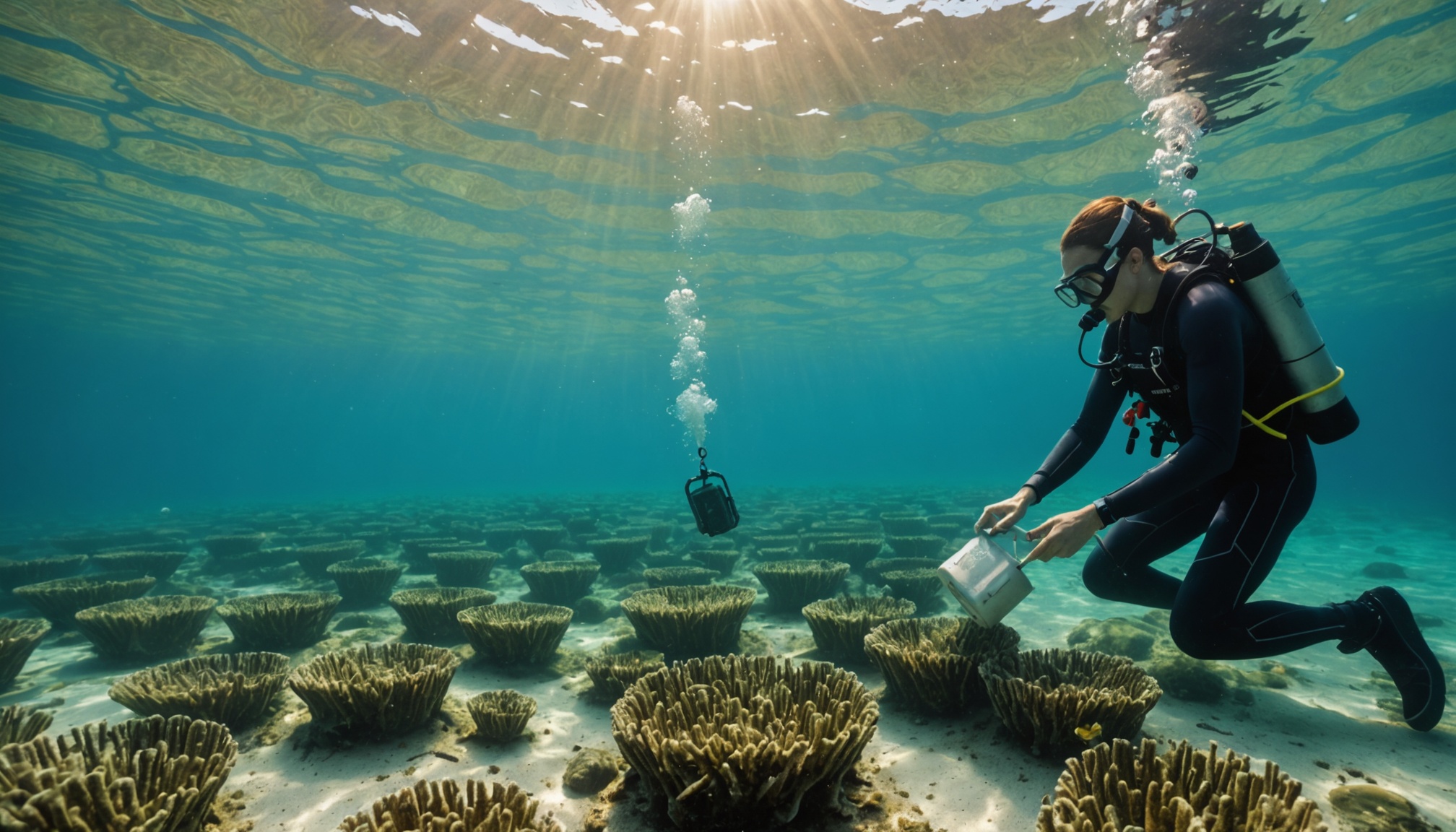
On the shores of the Thau lagoon, between Sète and Mèze, researchers from Ifremer (the French institute for ocean science research) dip their sensors into increasingly warm water every week. On May 30, 2026, the thermometer there read 25.4°C, compared with a seasonal average of 20.1°C for the same period. This Mediterranean lagoon, long studied for its oyster farming, has unwittingly become one of France's best indicators of the effects of warming on marine biodiversity.
A Full-Scale Laboratory in the Mediterranean
Contents
The Thau lagoon has a valuable feature for research: it is a semi-enclosed, shallow basin that responds quickly to atmospheric heat waves. Scientists there track three specific areas: describing the biodiversity present, understanding how the lagoon ecosystem functions, and modeling response scenarios to global change. The result is a rare database on how a single environment absorbs, or fails to absorb, temperature increases of several degrees within just a few weeks.
This monitoring comes after the hottest July ever recorded in France, a context that directly accelerated the warming of coastal waters observed this summer.
Some Species Under Stress, Others Adapting
The measured effects are tangible. Oysters in the basin now spawn earlier in the season, underwater seagrass beds are changing, gorgonian populations are declining, and some corals and giant clams are showing signs of bleaching, a thermal stress phenomenon previously associated mainly with tropical seas. Not all species react the same way: some are attempting to acclimate to these unusual temperatures, while others fail to survive in the medium term.
- Early spawning of oysters in the Thau basin
- Declining gorgonian populations
- Signs of bleaching in corals and giant clams
- Gradual changes in underwater seagrass beds
This tropicalization of the Mediterranean is not unique to the Thau lagoon: along the entire coastline, the sea is seeing the arrival of species from warmer areas, to the detriment of local wildlife and plant life. A mechanism not unlike the way heat waves are already disrupting pollinator biodiversity on land.
Ecoscopa: Near Real-Time Monitoring
To track this evolution as closely as possible, researcher Franck Lagarde and his team at Ifremer set up Ecoscopa, a network of sensors that transmits near-instant data on the health of the basin's shellfish. The goal is twofold: to quickly alert shellfish farming professionals in the event of a critical episode, and to feed long-term regional climate models. A monitoring approach that, in principle, parallels the one deployed for French forests, whose degradation is measured by the IGN (the French national geographic institute) despite a surface area that continues to expand.
Why This Monitoring Matters for the Whole Coastline
Beyond the case of Thau, scientists see this as an early signal of what could affect other French coastal ecosystems in the years ahead. The marine heat wave observed in the Mediterranean spares neither protected areas nor regulated species: it adds to a series of protective measures already underway elsewhere in the country, such as the ban on capercaillie hunting decided to save the species. For researchers, better understanding the Thau lagoon today means anticipating the management decisions that will be needed tomorrow along the rest of the Mediterranean coastline.
Frequently Asked Questions
Why is the Thau lagoon so closely monitored?
Because it is a semi-enclosed, shallow basin that responds very quickly to atmospheric heat waves, making it an early indicator of the effects of warming on Mediterranean marine ecosystems.
Which species are most affected by this warming?
Gorgonians, corals, and giant clams show the most visible signs of thermal stress, while oysters in the basin see their reproductive cycle shift earlier in the season.
What is Ecoscopa?
It is a network of sensors deployed by Ifremer in the Thau lagoon that transmits near-instant data on shellfish health to quickly alert professionals and feed climate models.
Sources
- Ifremer, Thau Lagoon (ROME)
- France Info, report on the Thau lagoon
- Dis-leur!, the overheating Mediterranean
Author Profile
Latest entries
 Food & Drink21 November 2026Beaujolais Nouveau: A Historically Low Harvest, Yet Sales Keep Climbing
 Finance20 November 2026Consumer Credit: Mini-Loans, Split Payments, and Overdrafts Face Tighter Rules
 Planet15 November 2026CO2 Emissions: Why Transportation Remains France's Climate Blind Spot
 Artificial Intelligence12 November 2026Imagine Enterprise: IBM and Microsoft Team Up on AI Agents for Large Businesses
This article was written with the help of artificial intelligence. Editorial policy