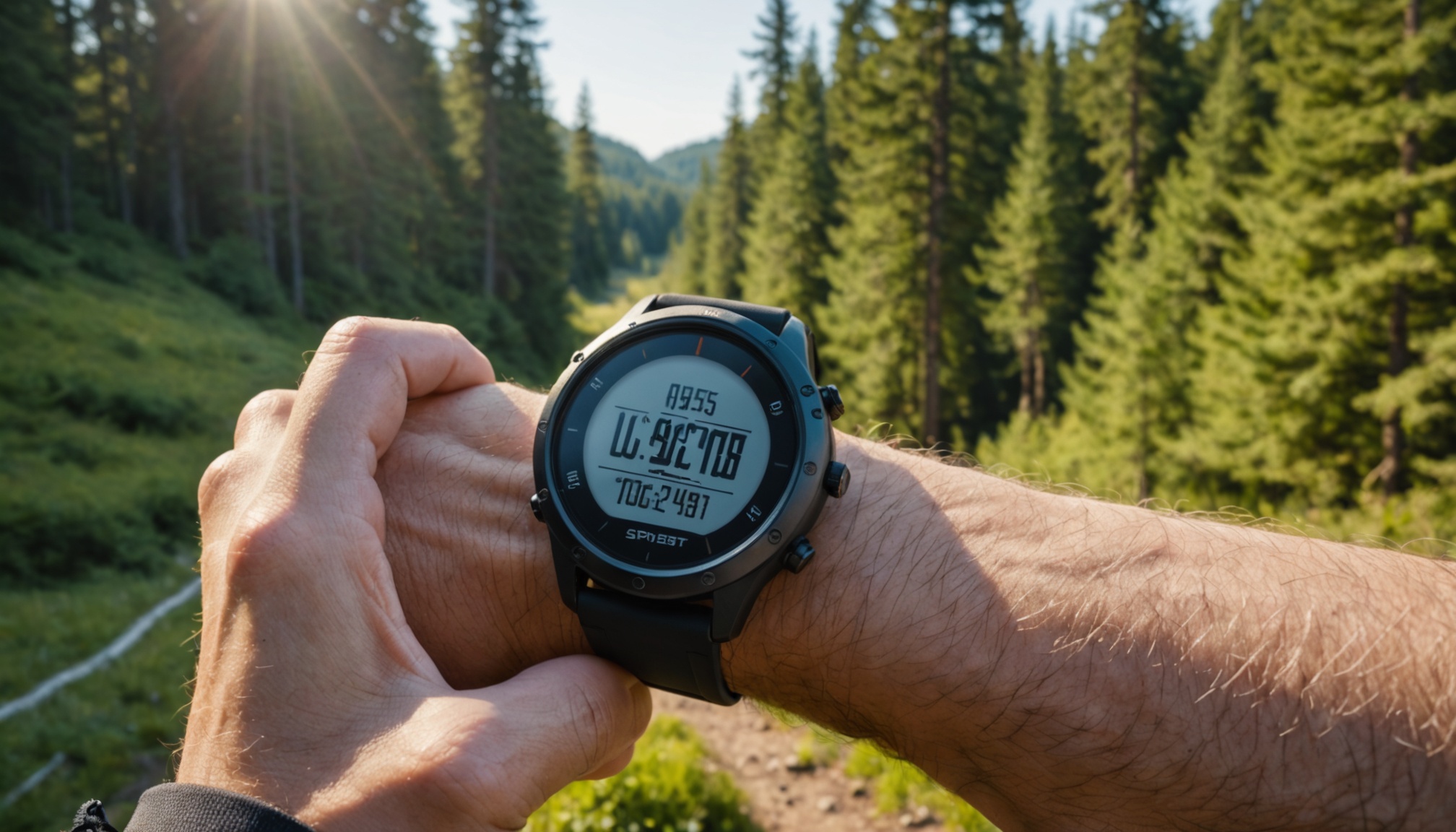
Choosing a GPS watch is no small matter: behind spec sheets that line up the same words (battery life, accuracy, wrist heart-rate monitoring), the real differences between two models can turn an enjoyable outing into a frustrating session. Before looking at price or design, a few criteria deserve real consideration.
Battery life, the most deceptive criterion
Contents
Manufacturers almost always advertise battery life in “smartwatch mode,” with GPS turned off. But it's battery life in active GPS mode that matters for sports. For typical road running, a range of 20 to 30 hours is plenty. For trail running or ultra-distances, aim for 40 hours or more instead, since running out of battery deep in the mountains is much harder to manage than in town.
Signal accuracy: a matter of constellations
Not all watches pick up satellites the same way. The most recent models combine several constellations (American GPS, but also Galileo, the European system) to refine positioning: in dense urban areas or under forest cover, this redundancy prevents the tracking errors that throw off distance and pace measurements. This is precisely why, to find your way without getting lost on unfamiliar terrain, a GPS watch remains the simplest tool to carry, far more reliable than pulling a smartphone out of your pocket every five minutes.
The wrist heart-rate sensor: useful, not infallible
Optical heart-rate measurement at the wrist has improved a great deal, but it remains sensitive to movement, cold, sweat, and even body hair or tattoos. A scientific review of the literature on wrist-worn activity trackers confirms that reliability varies widely from one device to another and from one person to another, especially during very intense efforts or sudden changes of pace. For threshold training or interval work, a chest strap therefore remains the safest complement.
Features to choose based on how you train, not what's trendy
Mapping, contactless payment, sleep tracking, a pulse oximeter: the list of features grows longer with each generation, but not all of them are useful to everyone. An urban runner doesn't have the same needs as a trail runner, just as choosing a pair of running shoes depends on the terrain as much as on performance goals. It's better to list your actual needs before being swayed by a feature-packed product page.
Sports, increasingly connected
The watch is just the visible part of a broader trend: sports are being equipped with an ever-growing range of connected devices, much like the smart home, where artificial intelligence is now making its way into everyday appliances. Interactive technologies in stadiums illustrate the same logic on a larger scale: collecting data to better understand effort, not to replace the athlete's common sense.
Frequently Asked Questions
Should you choose a multi-constellation watch (GPS + Galileo)?
Yes, if you often run in cities or forests: combining several positioning systems noticeably improves tracking accuracy in these environments, at the cost of slightly reduced battery life.
Is wrist-based heart-rate monitoring enough for training?
For base endurance work, yes in most cases. For interval training or precise heart-rate zones, a chest strap remains more reliable, as the optical sensor loses accuracy during rapid changes in intensity.
Can an entry-level watch work for a beginner?
Absolutely: the essential criteria remain battery life suited to your training and decent GPS accuracy. Advanced features (mapping, pulse oximeter, payment) only become useful with more regular or more demanding training.
Sources
- CNES (the French space agency) — how the Galileo system works and its accuracy
- UFC-Que Choisir (a French consumer protection organization) — buying guide for smartwatches
- Scientific review published on PMC (NCBI) — reliability of wrist-worn activity trackers
Author Profile
Latest entries
 Artificial Intelligence12 November 2026Imagine Enterprise: IBM and Microsoft Team Up on AI Agents for Large Businesses
 Economy11 November 2026Livret A Rate: Understanding How It's Calculated and Its Limits
 Shopping8 November 2026Black Friday: Key Dates and the Budget French Shoppers Are Planning
 Sports6 November 2026Men's Road Bike: How to Choose and Maintain One
This article was written with the help of artificial intelligence. Editorial policy