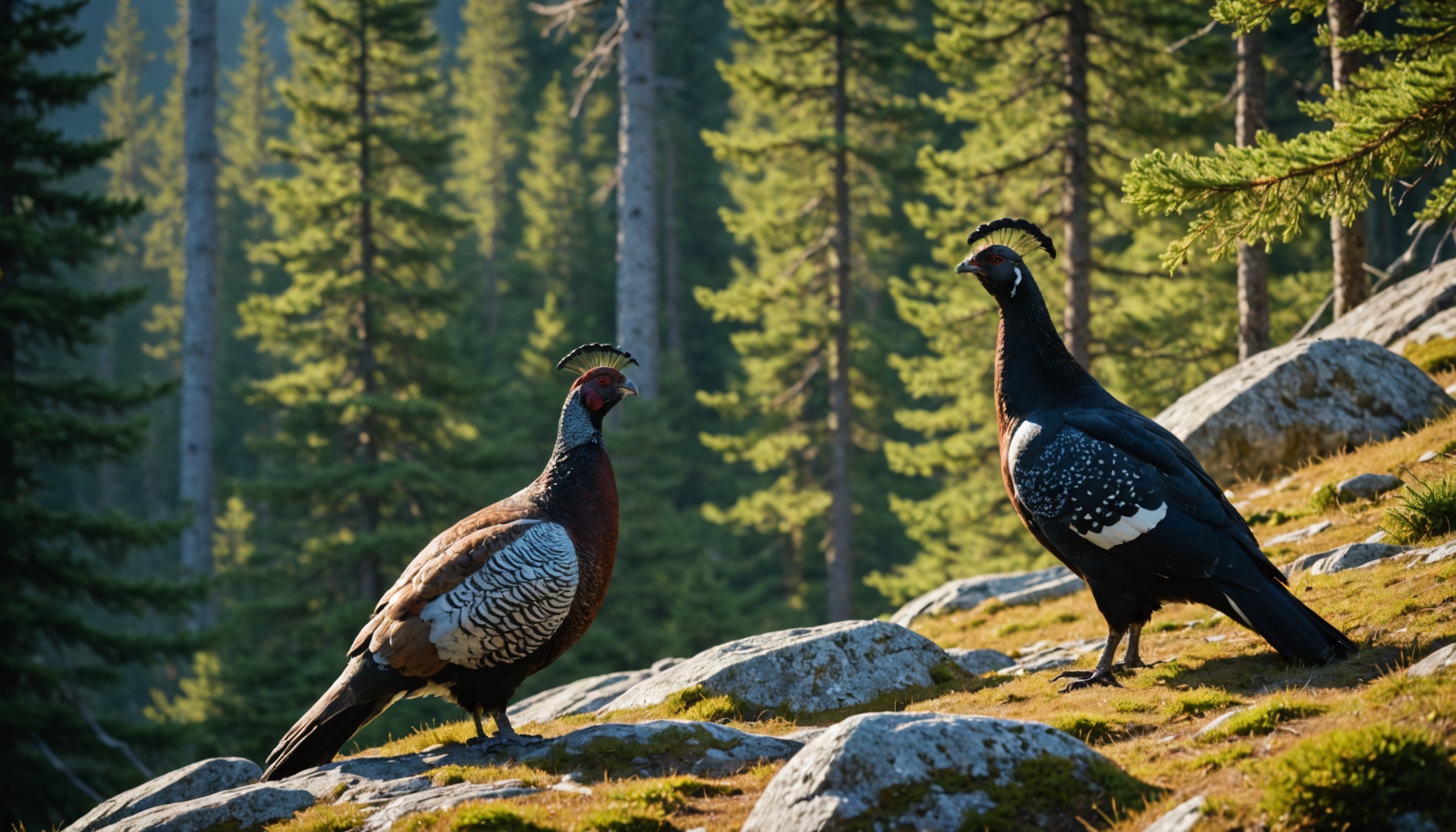
The capercaillie and the rock ptarmigan, two iconic birds of France's mountain ranges, have just been granted protected species status. Two decrees, published simultaneously in the Journal officiel (France's official gazette) on September 8, 2026, formalize this regulatory protection long awaited by conservation groups.
Two Decrees to Save Declining Populations
Contents
The first text, signed on August 12, 2026, concerns the rock ptarmigan; the second, dated September 3, 2026, protects the capercaillie. Both species share the same diagnosis: a conservation status deemed unfavorable by scientists, due to the combined effects of habitat loss and fragmentation, disturbances linked to human activity, and climate change, which is particularly pronounced at high altitude.
This regulatory step was initiated in April 2026 by the Ministry for Ecological Transition, then reinforced by a public consultation held over the summer: 80% of participants said they supported this classification.
What Protected Species Status Actually Changes
The protection now prohibits:
- the destruction or removal of eggs and nests;
- the destruction, capture, or removal of the birds, at any stage of their development;
- their intentional disturbance, particularly during sensitive breeding periods;
- the destruction, alteration, or degradation of their natural habitats.
This last provision is probably the most far-reaching: it now requires the presence of these species to be taken into account in development projects, livestock grazing activities, and mountain recreation (off-trail hiking, off-piste skiing, motorized vehicles), without banning them outright.
A Signal Amid Widespread Decline
This classification comes as the latest European assessment of the Habitats Directive (“Habitats, Faune, Flore”), covering the 2019-2024 period, shows worrying results for biodiversity in France: 67% of the habitat and species assessments monitored are rated unfavorable, and the share of environments in good conservation status declines year after year.
The capercaillie, Europe's largest forest-dwelling game bird, is now thought to number only a few hundred singing males in the Vosges and the Pyrenees, its last two strongholds in France. The rock ptarmigan, a bird with white winter plumage, is meanwhile suffering from the rising snowline, which shrinks its available habitat a little more each year.
An Issue That Goes Beyond These Two Species
Beyond these two birds, the move reflects a broader awareness of the state of mountain wildlife, already documented by several recent studies, such as research on the effects of heat waves on pollinators or on the warming of the Mediterranean and its consequences for marine biodiversity. The phenomenon isn't limited to endangered species: France also has to contend with the arrival of invasive species, such as the Japanese beetle recently detected in the country, which is likewise upsetting local ecological balances.
To learn more about biodiversity, check out the Environment section or the Science section of the site.
Frequently Asked Questions
Why are the capercaillie and the rock ptarmigan now protected?
Their populations have been steadily declining due to habitat degradation, human disturbance, and climate change. The new status aims to halt this trend by prohibiting their destruction and that of their habitats.
When did these measures take effect?
Both decrees were published in the Journal officiel on September 8, 2026: the one on the rock ptarmigan is dated August 12, 2026, and the one on the capercaillie is dated September 3, 2026.
What exactly is prohibited?
The destruction or capture of the birds and their eggs, their intentional disturbance during breeding, as well as the destruction or degradation of their natural habitats.
Sources
LPO — Press Release
France 3 Régions — Occitanie
Gossement Avocats Law Firm
Author Profile
Latest entries
 Food & Drink21 November 2026Beaujolais Nouveau: A Historically Low Harvest, Yet Sales Keep Climbing
 Finance20 November 2026Consumer Credit: Mini-Loans, Split Payments, and Overdrafts Face Tighter Rules
 Planet15 November 2026CO2 Emissions: Why Transportation Remains France's Climate Blind Spot
 Artificial Intelligence12 November 2026Imagine Enterprise: IBM and Microsoft Team Up on AI Agents for Large Businesses
This article was written with the help of artificial intelligence. Editorial policy