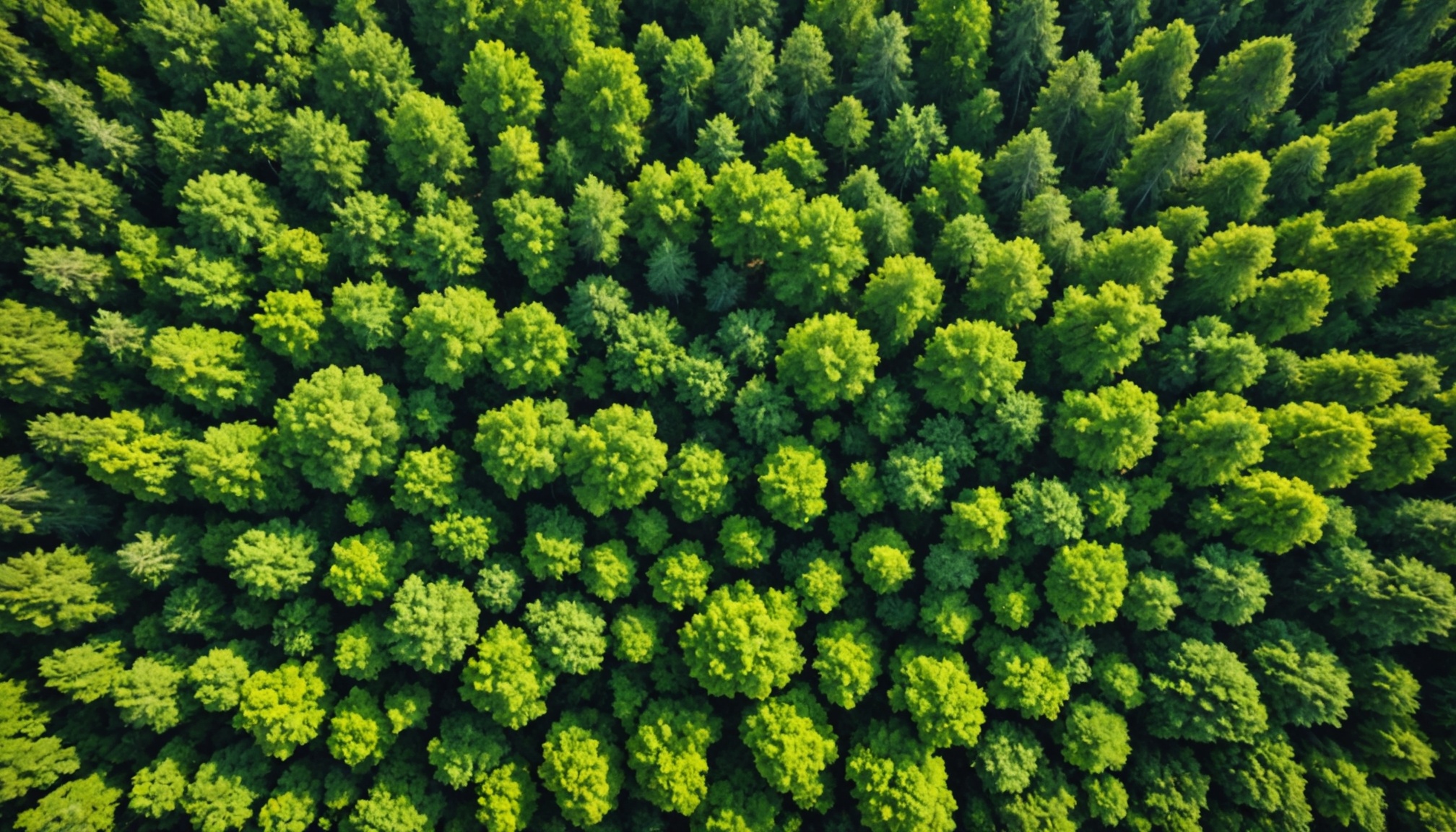
France's forests continue to expand, but they have never been in worse health. That's the conclusion of the new edition of the Sustainable Forest Management Indicators, published in early July 2026 by the French National Institute of Geographic and Forest Information (IGN), which documents for the first time the scale of the effects of climate change and health crises on the country's wooded areas.
A Larger but More Fragile Forest
Contents
On paper, the trend seems positive: France's forest area continues its expansion, driven by agricultural land abandonment and afforestation policies implemented over several decades. But behind this encouraging figure lies a more worrying reality. New data from the national forest inventory show that tree mortality has jumped 125% in ten years, while pathogen attacks have risen 175% since 2015.
Another alarming signal: the rate of broadleaf trees with severe foliage loss reached 15.3% in 2025, compared with just 2.2% in 1997. This indicator directly reflects the physiological weakening of trees, making them more vulnerable to droughts, wildfires, and pest insects.
A Carbon Sink Running Out of Steam
The most worrying consequence concerns the role forests play in the fight against global warming. As a carbon sink, France's forests normally absorb part of the CO2 emitted by human activities. However, over the 2013-2021 period, this sink averaged about 40 million metric tons of CO2 per year, a volume that has fallen by a third in a decade.
In several regions, the situation has even reversed: tree mortality and timber harvesting now exceed the forest's biological production, directly undermining its ability to store carbon over the long term. This is a major issue for France's climate strategy, which relies heavily on natural sinks to meet its carbon neutrality targets.
Droughts, Wildfires, and Disease to Blame
The IGN points to a combination of factors to explain this decline: more frequent droughts, rising average temperatures, a resurgence of wildfires, and the spread of diseases and pest insects, favored by milder winters. These increasingly frequent and intense disturbances no longer give forest ecosystems enough time to regenerate between crises.
- Tree mortality: +125% in ten years
- Pathogen attacks: +175% since 2015
- Severe foliage loss in broadleaf trees: 15.3% in 2025 (compared with 2.2% in 1997)
- Forest carbon sink: about 40 Mt of CO2/year, down a third in ten years
These figures confirm observations already shared by several scientific organizations in recent years: France's forests, long considered a stable resource, are entering a phase of rapid transition that calls for a profound shift in forest management practices. To better understand the issues related to climate change, also check out our practical tips and our science section.
Toward a Rethink of Forest Management
In light of these findings, forestry experts are calling for greater diversity in the species planted, a preference for varieties more resistant to drought, and stronger health monitoring of forest areas. The goal: to preserve the forest's ability to fulfill its many functions, whether timber production, biodiversity conservation, or climate regulation.
Frequently Asked Questions
Why is the French forest growing despite its decline in health?
Forest area is increasing mainly due to agricultural land abandonment and the natural reclaiming of abandoned land, a phenomenon unrelated to the health of existing trees, which is deteriorating under the effects of climate change.
What is a forest carbon sink?
It's a forest's ability to absorb more CO2 than it emits, thanks to tree growth. When mortality and harvesting exceed this growth, the sink shrinks, or even reverses locally.
Which regions are most affected?
Areas most exposed to recurring droughts and heat waves, particularly in the south and east of the country, show the most pronounced signs of decline, with timber harvesting now exceeding biological production.
Sources
- IGN — French Forests in 2026: Sustainable Management Put to the Test by Global Change
- Notre Environnement (SDES) — Why French Forests Are Expanding but Capturing Less CO2
- Actu-Environnement — These Indicators Warn of a Decline in the Health of French Forests
Author Profile
Latest entries
 Food & Drink21 November 2026Beaujolais Nouveau: A Historically Low Harvest, Yet Sales Keep Climbing
 Finance20 November 2026Consumer Credit: Mini-Loans, Split Payments, and Overdrafts Face Tighter Rules
 Planet15 November 2026CO2 Emissions: Why Transportation Remains France's Climate Blind Spot
 Artificial Intelligence12 November 2026Imagine Enterprise: IBM and Microsoft Team Up on AI Agents for Large Businesses
This article was written with the help of artificial intelligence. Editorial policy