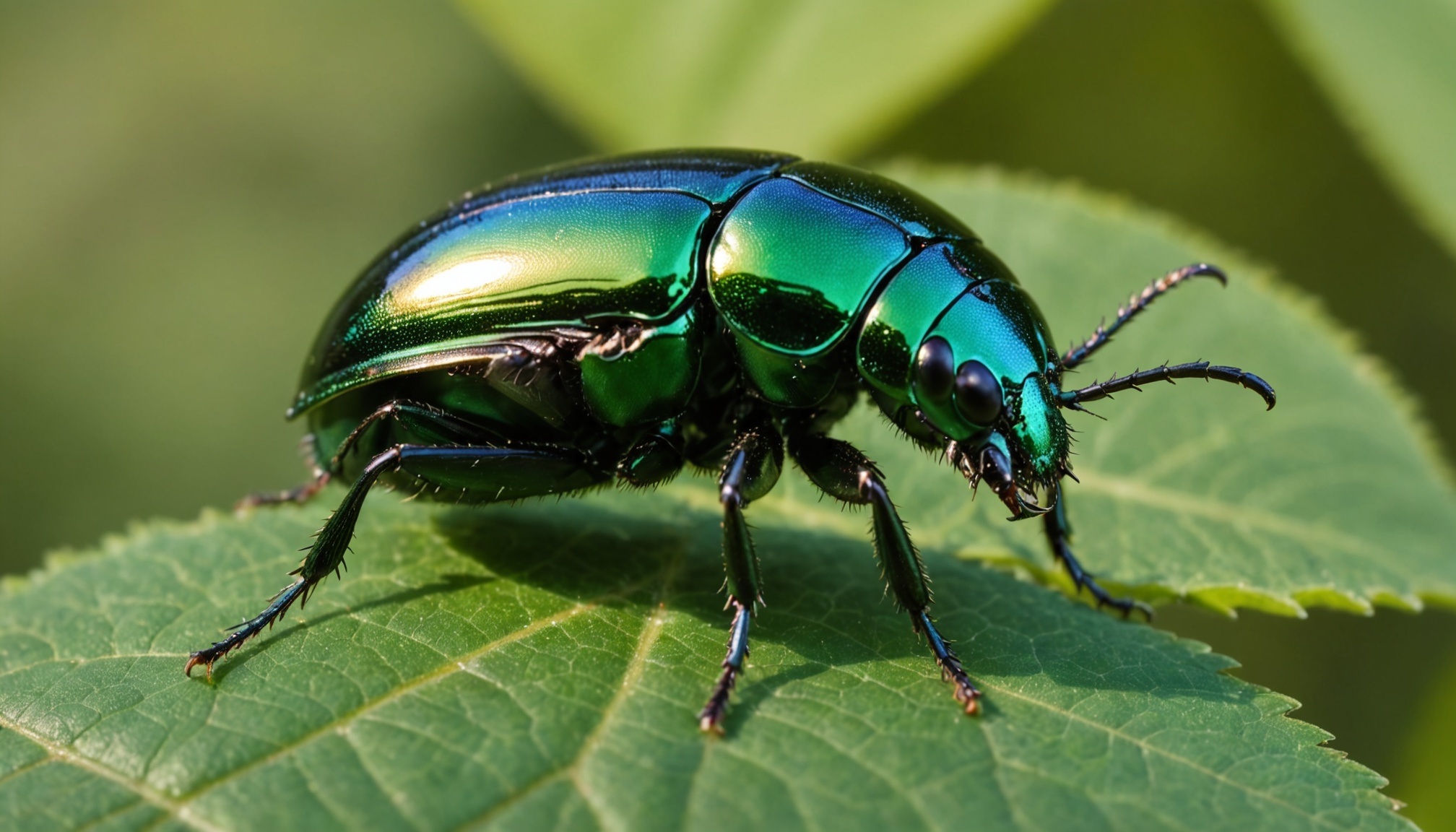
A beetle under two centimeters long, with a metallic green sheen, is now occupying the attention of France's plant health surveillance services. The Japanese beetle (Popillia japonica) was captured again on French territory in June 2026, confirming that this invasive species is no longer just “at the gates” of France: it is quietly getting a foothold there. For gardens, vineyards, and parts of our rural landscapes, the stakes are concrete.
What Just Happened
Contents
Two separate detections marked the start of summer. A first specimen was identified in the town of Écot, in the Doubs department, in mid-June, an identification confirmed by the Anses national reference laboratory (France's agency for food, environmental, and occupational health safety). A few days later, a specimen was trapped in the Strasbourg area, followed by a second nearby. These captures come after a first French appearance in 2025, in the Haut-Rhin and Bas-Rhin departments, where five isolated insects had been intercepted.
The Japanese beetle is not a newcomer to Europe: it has been established in Italy since 2014 and in Switzerland since 2017. Its spread northward and westward follows major transport routes, as the insect readily hitches rides in vehicles, goods, or plants.
Why This Insect Is a Concern
Classified as a top-priority quarantine organism by the European Union, Popillia japonica stands out for its extraordinary appetite. It attacks more than 400 plant species: grapevines, fruit trees, berries, corn, but also lawns and many ornamental plants. Adults devour foliage down to the veins, while larvae gnaw at lawn roots below the surface.
The potential cost gives a sense of the risk. A Europe-wide study estimates that, without management measures, damage could range between €30 million and €7.8 billion a year, depending on the scale of the infestation and the crops affected. This very wide range mainly reflects uncertainty: everything depends on how quickly the species is contained.
How to Identify It
The adult insect measures about one centimeter. Its body is shiny metallic green, its wings coppery brown. The telltale detail: small tufts of white hair lined up along the sides of the abdomen, five on each side, plus two at the rear. This is the feature that distinguishes it from our native chafers and scarab beetles, with which it is often confused.
- Bright green sheen on the head and thorax
- Twelve tufts of white hair bordering the abdomen
- Present in broad daylight, in groups, on foliage
- Active flight between June and August
What Everyone Can Do
The official strategy relies on early detection and reporting. If you suspect you've spotted one, the advice is to photograph the insect and capture it if possible, then notify the regional food safety services (DRAAF/SRAL, France's regional agriculture and food directorates). Do not release the insect or transport it alive. This citizen reflex complements the networks of traps set up around sensitive areas and helps map any potential establishment of the species.
To learn more about protecting wildlife, check out our Environment section. Those concerned about their gardens will find guidance in our Home section, and nature science enthusiasts in our Science section.
Frequently Asked Questions
Is the Japanese beetle dangerous to humans?
No. It does not sting and poses no direct health risk to people or pets. The threat is strictly to plants and agriculture.
Should it be killed if you find one?
Yes, but report it. The best approach is to capture it, photograph it, and contact the relevant regional services rather than acting alone, so the detection can be officially recorded.
Could it be mistaken for a local insect?
Easily. Scarab beetles and chafers resemble it. Only the twelve tufts of white hair on the sides of the abdomen allow for reliable identification.
Sources
- La France Agricole — Popillia japonica detected in France in 2026
- DRAAF Grand Est — Control measures guide (March 2026)
- DH — Japanese beetles detected again in France
Author Profile
Latest entries
 Food & Drink21 November 2026Beaujolais Nouveau: A Historically Low Harvest, Yet Sales Keep Climbing
 Finance20 November 2026Consumer Credit: Mini-Loans, Split Payments, and Overdrafts Face Tighter Rules
 Planet15 November 2026CO2 Emissions: Why Transportation Remains France's Climate Blind Spot
 Artificial Intelligence12 November 2026Imagine Enterprise: IBM and Microsoft Team Up on AI Agents for Large Businesses
This article was written with the help of artificial intelligence. Editorial policy