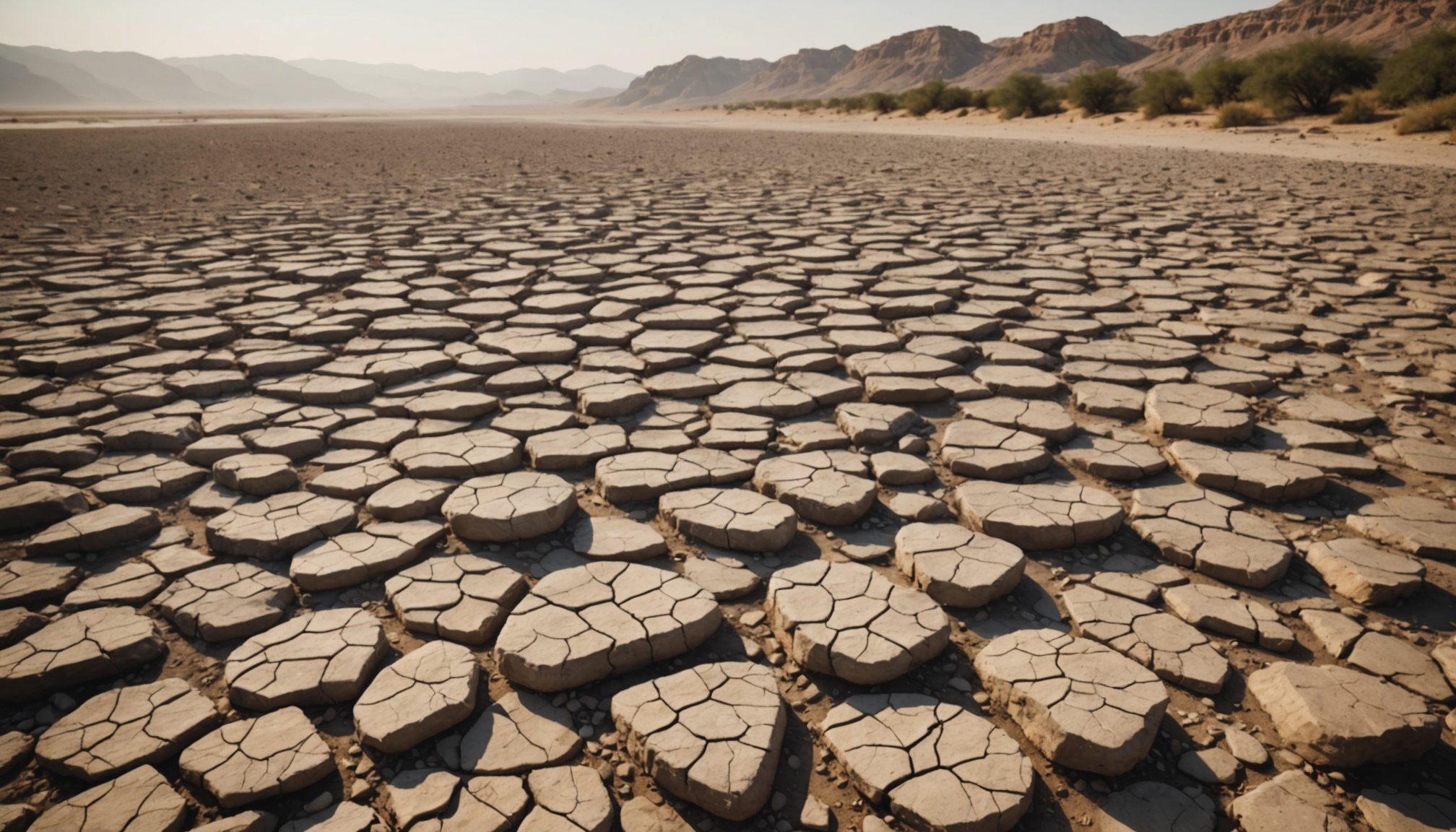
France is going through another extraordinary drought episode. According to the French Office for Biodiversity (OFB), more than 1,400 rivers were dry or had interrupted flow in early September 2026, a level that now exceeds the record set during the historic drought of 2022. This figure, from the National Low-Water Observatory (ONDE), confirms a trend observed throughout the summer: small rivers are drying up faster than in previous years, with direct consequences for aquatic ecosystems.
A Level That Surpasses the 2022 Record
Contents
The ONDE network, deployed since 2012, relies on about 3,230 monitoring stations spread across every French département and observed visually by OFB staff following a standardized national protocol. As of August 1, 2026, 1,373 rivers were already affected by interrupted flow or complete dryness, 112 more than on the same date in 2022 and more than double the level recorded at the end of July 2025. By early September, the figure continued to climb, surpassing 1,400 observation points — about 30 more than the 2022 peak and nearly 290 more than during the same period last year. According to the OFB, this is the highest degradation level ever recorded for this time of year since the monitoring system was created.
Concrete Consequences for Aquatic Wildlife and Plants
When a river's flow drops, several mechanisms kick in and weaken aquatic environments:
- The water warms up faster and loses some of its dissolved oxygen;
- Pollutants and nutrients become more concentrated for lack of sufficient dilution;
- The reproduction, growth, and survival of fish and invertebrate species are disrupted;
- Aquatic habitats become fragmented, isolating entire populations.
These effects add to those already documented in other parts of the natural world this summer, as shown by the pressure the heat wave has put on pollinators across France.
An Entire Country Under Strain
No region has been spared, but the degradation is especially pronounced along an axis running from Vendée to the Grand Est, before spreading into the central part of southern France. This situation echoes a summer 2026 already described by Météo-France as the hottest ever recorded in France, with heat that has been almost unbroken since late May and has also fueled wildfires, including the one that recently led to the temporary closure of part of the Fontainebleau forest. More than 80% of mainland France was still under prefectural restriction orders in early August, including about 70% under strict restrictions (heightened alert or crisis level), a level unseen in ten years.
What's Next for Water and Forest Management?
This buildup of warning signs raises questions about the resilience of French ecosystems in the face of increasingly hot, dry summers. The French National Institute of Geographic and Forest Information (IGN) had already warned that French forests are expanding even as their health declines, which reduces their capacity to absorb CO2 while making them more vulnerable to water shortages. Watershed managers, water agencies, and local authorities will need to adapt their resource-sharing policies if these episodes — already compared to the record summer that saw heat records broken in July — keep recurring in the years ahead.
Frequently Asked Questions
How many rivers are affected in France in early September 2026?
More than 1,400 rivers have interrupted flow or are completely dry, according to the OFB's National Low-Water Observatory, a level higher than the previous 2022 record.
Why does river flow affect biodiversity?
Lower flow warms the water, reduces oxygenation, concentrates pollutants, and fragments habitats, which disrupts the reproduction and survival of many aquatic species.
Which regions are most affected by this drought?
Every region in France is affected, with degradation particularly pronounced along an axis running from Vendée to the Grand Est, which is now spreading toward central southern France.
Sources
- French Office for Biodiversity (OFB) — Status of small river flows
- Sciencepost — 43% of small French rivers no longer flowing as of August 1, 2026
- Réussir — Drought 2026: by the end of July, 112 more rivers had dried up than in 2022
Author Profile
Latest entries
 Planet15 November 2026CO2 Emissions: Why Transportation Remains France's Climate Blind Spot
 Artificial Intelligence12 November 2026Imagine Enterprise: IBM and Microsoft Team Up on AI Agents for Large Businesses
 Economy11 November 2026Livret A Rate: Understanding How It's Calculated and Its Limits
 Shopping8 November 2026Black Friday: Key Dates and the Budget French Shoppers Are Planning
This article was written with the help of artificial intelligence. Editorial policy