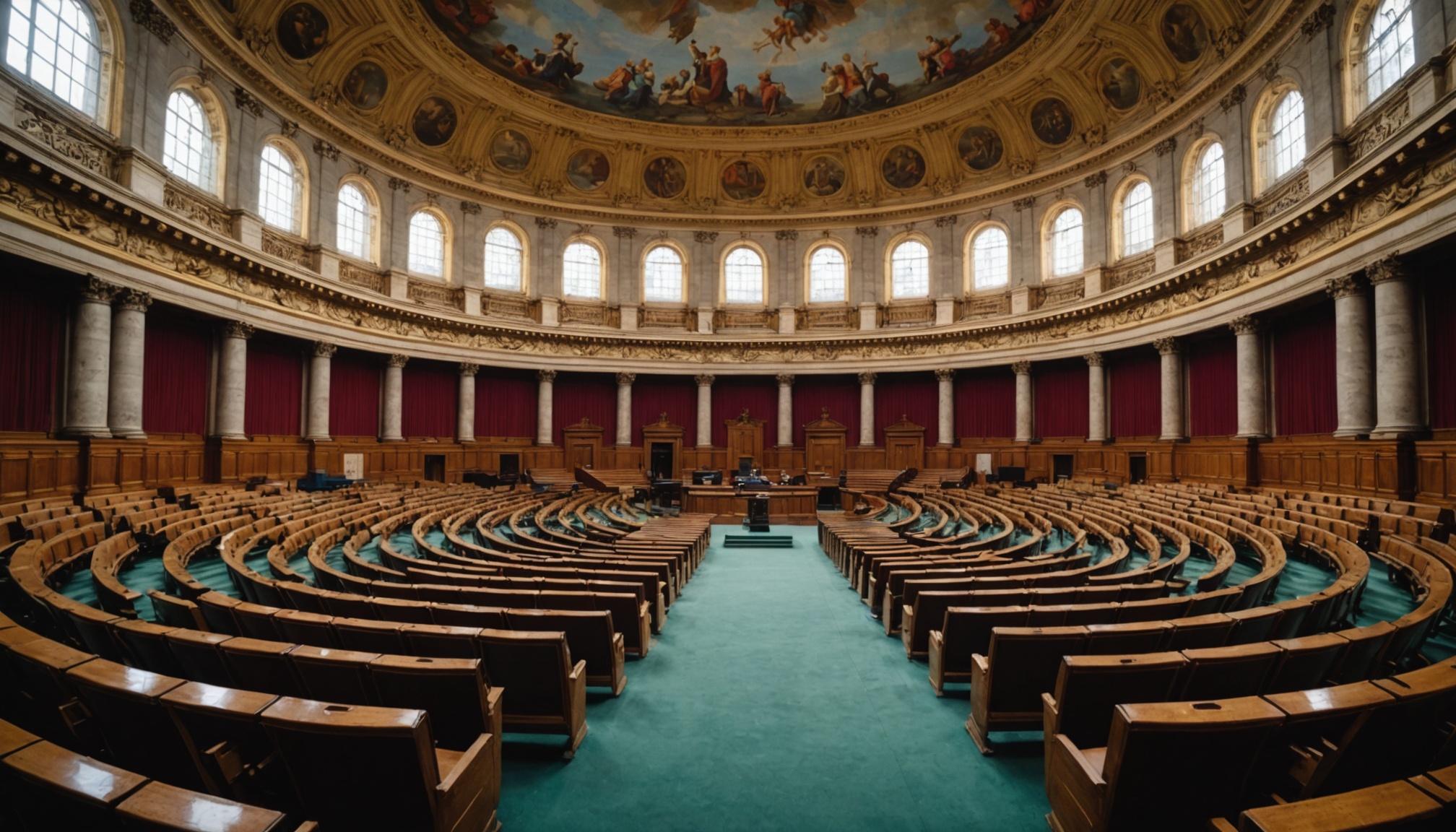
Every fall, the same question comes up: why does the French National Assembly seem to be at a standstill in September, when ministries, businesses, and schools have been back in session for weeks? The answer lies neither in a one-off political choice nor in government negligence: it is written in black and white in the Constitution of the Fifth Republic, which organizes the parliamentary calendar in a far more rigid way than one might imagine.
A Calendar Set by the Constitution, Not by the Government
Contents
Article 28 of the Constitution provides that Parliament convenes as a matter of right in a single ordinary session, which begins on the first business day of October and ends on the last business day of June. Outside this framework, members of parliament are therefore under no obligation to sit in July, August, or September. Another, lesser-known limit: the number of sitting days for each chamber may not exceed 120 days over the entire session, which pushes parliamentary groups to concentrate their work in the months when the agenda is busiest.
Why There Is No Special Session This Year
A special session remains possible outside this calendar, but it must be convened by decree of the President of the Republic, at the request of the Prime Minister or a majority of members of parliament, and must address a precisely defined agenda. This year, the government chose not to use this option in September. This decision comes as the Senate elections, which renew part of the Senate, are being held in late September—an electoral schedule that, in effect, limits the useful window for convening members of parliament before the ordinary session resumes.
The Real Timeline for the 2027 Budget
Another misconception is thinking that the absence of a session in September delays major budget work. In reality, the draft state budget for 2027 must be presented to the Council of Ministers in late September, before its actual parliamentary review extends from October to December—the same marathon that, every year, occupies the chamber over the high-pressure parliamentary calendar of the finance bill and the Social Security budget.
What to Remember
- October 1: the ordinary session automatically resumes at the National Assembly
- Late September: Senate elections renewing part of the Senate
- Late September: presentation of the 2027 draft budget to the Council of Ministers
- 120 days: constitutional cap on sitting days for the ordinary session
An Institutional Mechanism That Is Often Misunderstood
This arrangement is all the more surprising given that it coexists with a packed institutional news cycle: the appointment of seven new prefects this summer, or reminders about the balance of power under the Fifth Republic following the death of Édouard Balladur, whose career notably sheds light on the mechanics of French-style cohabitation. On the economic front, the fallout from Fitch's verdict on France's sovereign rating adds further pressure to the decisions that will have to be made as soon as Parliament reconvenes.
Frequently Asked Questions
Why doesn't the National Assembly sit in September?
Because the Constitution provides for only one ordinary session, running from October to June. Outside this period, members of parliament sit only if a special session is specifically convened, which was not the case this year.
What is a special session?
It is a meeting of Parliament outside the ordinary session, convened by decree of the President of the Republic at the request of the Prime Minister or a majority of members of parliament, for a limited agenda that is precisely defined in advance.
When will the 2027 budget actually be reviewed?
The bill must be presented to the Council of Ministers in late September, but its actual parliamentary review—debates, amendments, votes—takes place from October to December, once the ordinary session opens.
Sources
- NosParlementaires — National Assembly calendar
- Fondation Jean-Jaurès — the 2026 fall calendar
- Kohen Avocats — no special session in September 2026
Author Profile
Latest entries
 Food & Drink21 November 2026Beaujolais Nouveau: A Historically Low Harvest, Yet Sales Keep Climbing
 Finance20 November 2026Consumer Credit: Mini-Loans, Split Payments, and Overdrafts Face Tighter Rules
 Planet15 November 2026CO2 Emissions: Why Transportation Remains France's Climate Blind Spot
 Artificial Intelligence12 November 2026Imagine Enterprise: IBM and Microsoft Team Up on AI Agents for Large Businesses
This article was written with the help of artificial intelligence. Editorial policy