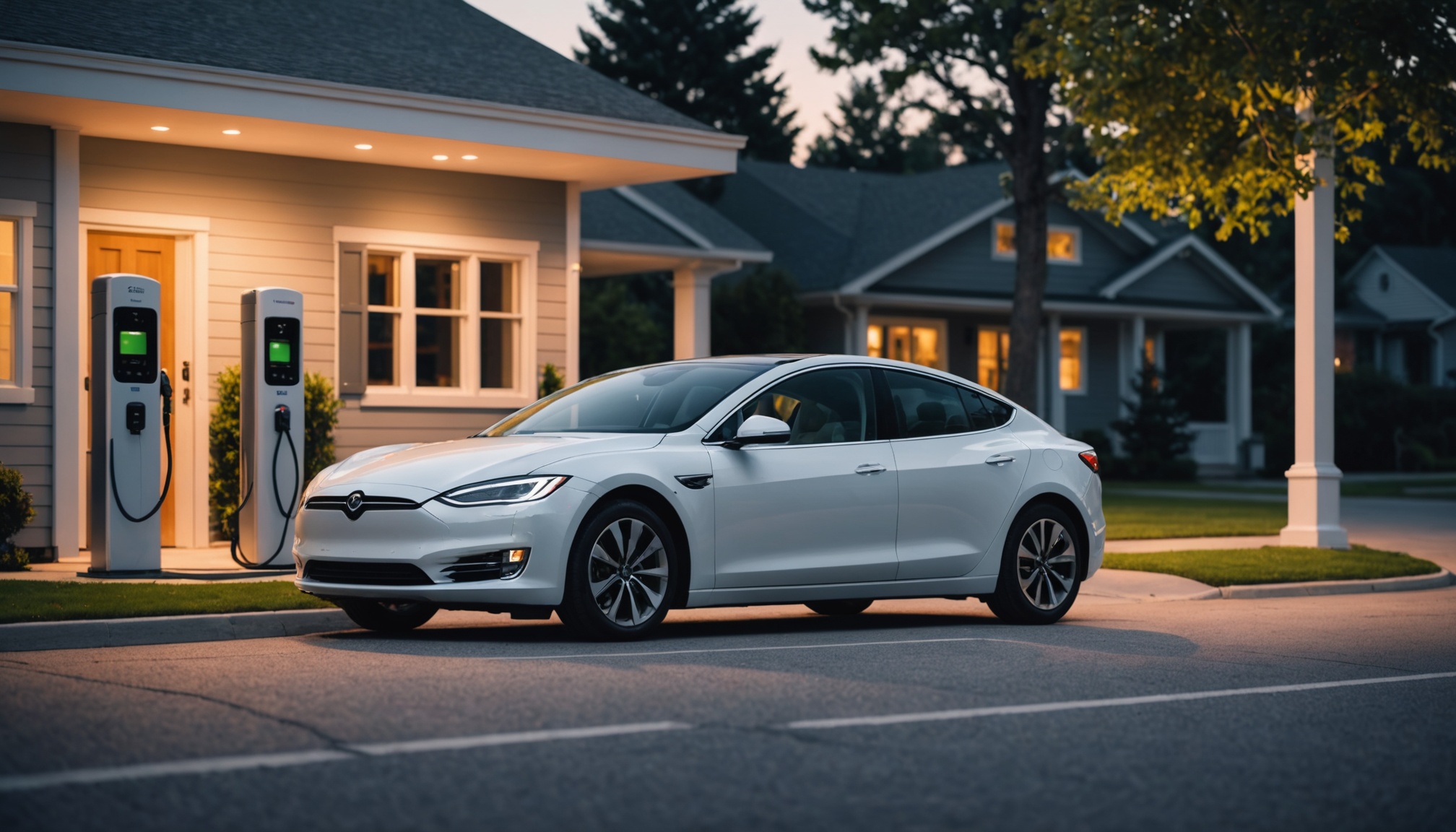
The electric-versus-gas debate has just gained a powerful new argument backed by hard numbers. A study reported in early September by Ouest-France, comparing in particular a gas-powered Peugeot 308 with a Tesla Model 3, finds that the car budget gap between the two types of engines can reach more than 20,000 euros over 16 years of use. That's enough to change the calculus for millions of drivers in France who are still hesitating to make the switch.
The surprising figure: up to four times cheaper per kilometer
Contents
On energy costs alone, the gap is already striking. Charging an electric car at home, during off-peak hours, costs around 2.50 to 3 euros per 100 km, compared to nearly 12 euros for a gas model consuming 6.5 liters per 100 km at current fuel prices. Over a year, for a driver covering 15,000 km, that works out to a fuel budget of about 1,900 euros versus 450 to 550 euros in electricity, an annual savings of more than 1,300 euros. Cumulated over 16 years, factoring in purchase price, energy, and maintenance, the total gap climbs to about 20,100 euros in favor of electric.
The real issue: total cost, not just the sticker price
This is where the reasoning shifts. The main obstacle to buying an electric car is still often its upfront price, higher than that of an equivalent gas-powered model. But this study confirms a trend already identified in the market: it's the total cost of ownership, spread over several years, that should guide the choice, not just the price tag at the dealership. This is, in fact, part of why more and more households in France are turning to leasing instead of buying outright: the arrangement smooths out the initial investment and lets drivers benefit from usage savings without tying up a large amount of capital.
Another option gaining ground to get around the barrier of a high new-car price: the booming market for used electric and hybrid vehicles, which gives access to the same charging savings at a much lower entry cost.
What this means in practice for drivers
- For everyday trips, charging at home remains unbeatable compared to filling up on gas;
- The gap shrinks considerably at fast highway charging stations, which are pricier;
- The calculation must also factor in maintenance, which is generally lower for an electric motor;
- One-off aid, such as the €100 fuel subsidy paid to high-mileage drivers, remains useful in the short term but doesn't compete with the structural savings electric vehicles offer over time.
For owners of an older gas-powered vehicle considering the switch, the question of what to do with it also comes up: resale, or sometimes scrapping it, an option that can make sense depending on the vehicle's condition.
A shift that still needs some nuance
This study doesn't claim that electric is suited to every use case: a high-mileage driver with no way to charge at home, dependent on fast charging stations, will see this economic advantage shrink considerably. Likewise, the purchase price remains a real obstacle for part of the population, despite the gradual drop in prices for some models. Still, the main takeaway is clear: for everyday use with home charging, the budget gap between electric and gas is now hard to ignore.
Frequently Asked Questions
How much does charging an electric car really cost compared to filling up with gas?
At home, expect to pay around 2.50 to 3 euros per 100 km for an electric car, compared to nearly 12 euros for a gas model—a ratio that can reach up to 4 to 1, according to the study reported by Ouest-France.
Is the cost gap the same everywhere?
No. It's largest when charging at home during off-peak hours and shrinks significantly at fast highway charging stations, where the price per kWh is much higher.
Are leasing or buying used good options to ease the burden of a high purchase price?
Yes: leasing helps smooth out the initial investment, while the booming market for used electric and hybrid vehicles provides access to the same usage savings at a more affordable entry price.
Sources
Ouest-France, The Inquirer, and L'Énergeek.
Author Profile
Latest entries
 Food & Drink21 November 2026Beaujolais Nouveau: A Historically Low Harvest, Yet Sales Keep Climbing
 Finance20 November 2026Consumer Credit: Mini-Loans, Split Payments, and Overdrafts Face Tighter Rules
 Planet15 November 2026CO2 Emissions: Why Transportation Remains France's Climate Blind Spot
 Artificial Intelligence12 November 2026Imagine Enterprise: IBM and Microsoft Team Up on AI Agents for Large Businesses
This article was written with the help of artificial intelligence. Editorial policy