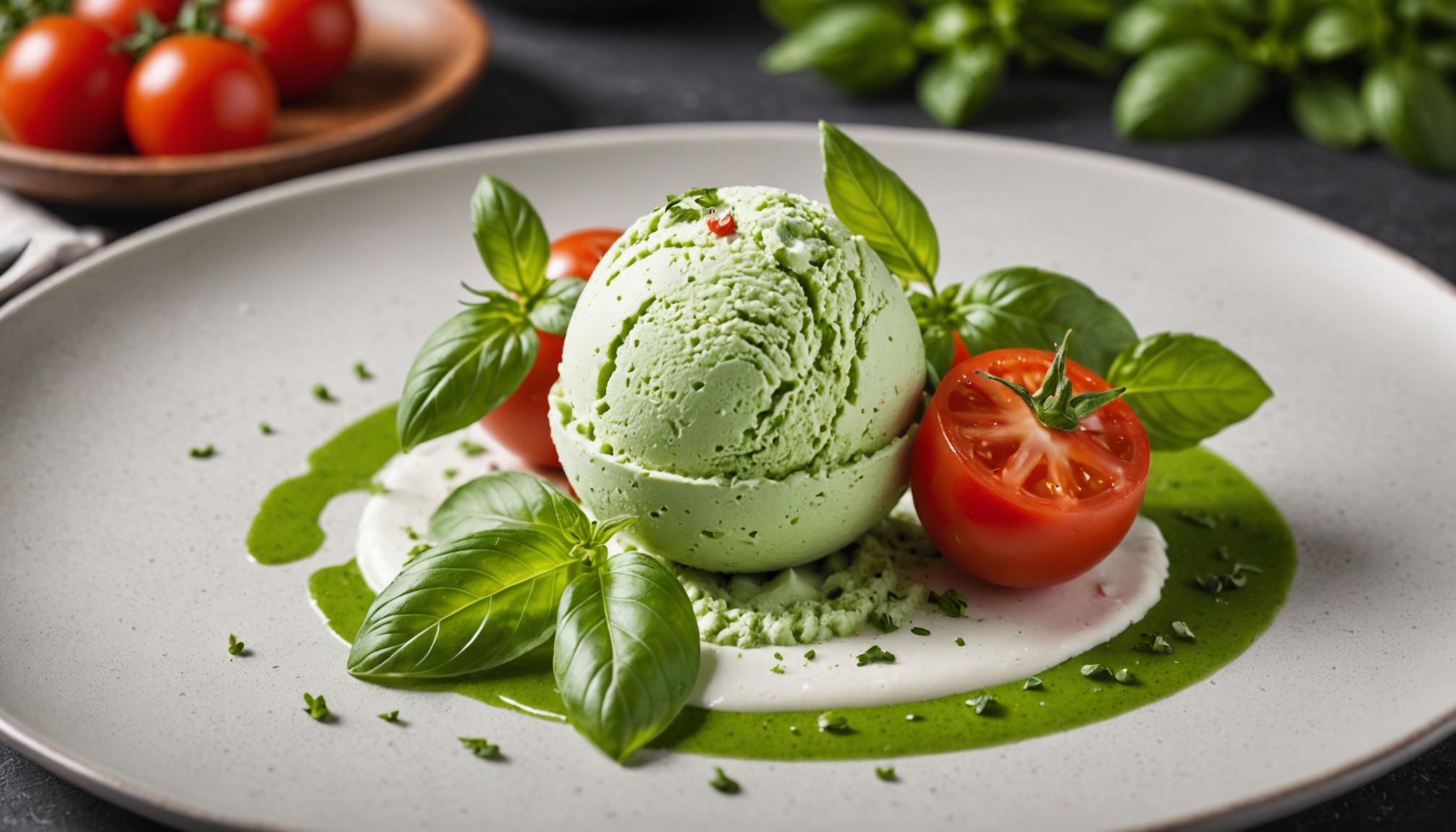
On the menus of restaurants and in the display cases of ice cream shops, a new arrival has been making a name for itself since this summer: savory ice cream. Tomato, avocado, pickle, and bitter herbs are gradually replacing sugar in frozen desserts, to the point of becoming one of the most talked-about trends of the fall culinary season in France. Far from a simple seasonal gimmick, this movement reflects a deeper shift in French taste, caught between fatigue with sweetness and a search for new sensations.
A Revolution Born in Michelin-Starred Kitchens
Contents
It was first in high-end gastronomy that savory ice cream proved itself. This summer, the Parisian restaurant La Grande Cascade served a tomato-and-stracciatella granita, a chilled gazpacho with creamy touches, and a lemon-and-arugula kakigori, where the leaf's bitterness balances the citrus's acidity. These creations are part of a broader movement of chefs reinventing the classic codes of French gastronomy, taking ice cream out of its role as a simple dessert to make it a full-fledged part of the plate. The more accessible tomato-and-basil sorbet often serves as an entry point into this new taste experience, somewhere between anise-tinged freshness and a tangy edge.
From the Ice Cream Counter to Supermarket Shelves
The trend isn't confined to fine-dining tables. Several specialized publications note that savory flavors are now making their way onto supermarket ice cream shelves, where a few brands are testing less-sweet options to appeal to customers looking for novelty. This shift from restaurants to the general public illustrates a now-familiar phenomenon in the world of food consumption: an innovation tested in professional kitchens eventually ends up in grocery carts, if it finds an audience. For now, this remains a gradual and still marginal rollout, more of an avenue being explored by manufacturers than an established trend.
A Response to Sugar Fatigue
Why such enthusiasm now? Industry observers see it as the convergence of two forces. On one hand, there's a desire to cut back on excess sugar in everyday eating, a concern that has now spread even to dessert. On the other, there's a quest for depth of flavor: after years dominated by fat and sugar, palates are increasingly drawn to umami, bitterness, and acidity. This search for contrast ties in with the broader trends currently reshaping French restaurant menus, where fermentation and unprocessed ingredients are playing a growing role. Savory ice cream has thus become a symbol: that of a cuisine that values the ingredient and the contrast over sweetness for its own sake.
What Are the Limits of This Trend?
It remains to be seen whether this fad will last through the winter. Industry professionals remain cautious: savory ice cream requires precise technical skill to stay balanced, and its audience, still limited to adventurous eaters, isn't guaranteed to grow significantly. This period of experimentation comes as the restaurant industry in France is otherwise going through a difficult stretch, caught between business failures and a resurgence of the traditional bistro. For many establishments, betting on culinary innovation remains a way to stand out without abandoning the fundamentals of the trade.
Frequently Asked Questions
What exactly is savory ice cream?
It's a frozen preparation in which sugar is no longer the dominant ingredient, replaced or accompanied by vegetables, herbs, or condiments such as tomato, avocado, pickle, or arugula. The result sometimes resembles a sorbet, sometimes a granita, and is enjoyed as a starter or side dish rather than a traditional dessert.
Where can you try savory ice cream without going to a restaurant?
Some artisanal ice cream shops now offer limited-edition savory flavors, especially during the summer. Availability on supermarket shelves, meanwhile, remains occasional and limited to a few pioneering brands.
Will this trend last, according to industry professionals?
Opinions differ: some chefs see it as a lasting shift in consumer taste toward less sugar, while others view it as a seasonal fad. The only certainty for now is that demand for novelty and contrast in cooking doesn't seem to be slowing down.
Sources
Time Out Paris,
Fine Dining Lovers,
Maison Terme.
Author Profile
Latest entries
 Food & Drink21 November 2026Beaujolais Nouveau: A Historically Low Harvest, Yet Sales Keep Climbing
 Finance20 November 2026Consumer Credit: Mini-Loans, Split Payments, and Overdrafts Face Tighter Rules
 Planet15 November 2026CO2 Emissions: Why Transportation Remains France's Climate Blind Spot
 Artificial Intelligence12 November 2026Imagine Enterprise: IBM and Microsoft Team Up on AI Agents for Large Businesses
This article was written with the help of artificial intelligence. Editorial policy