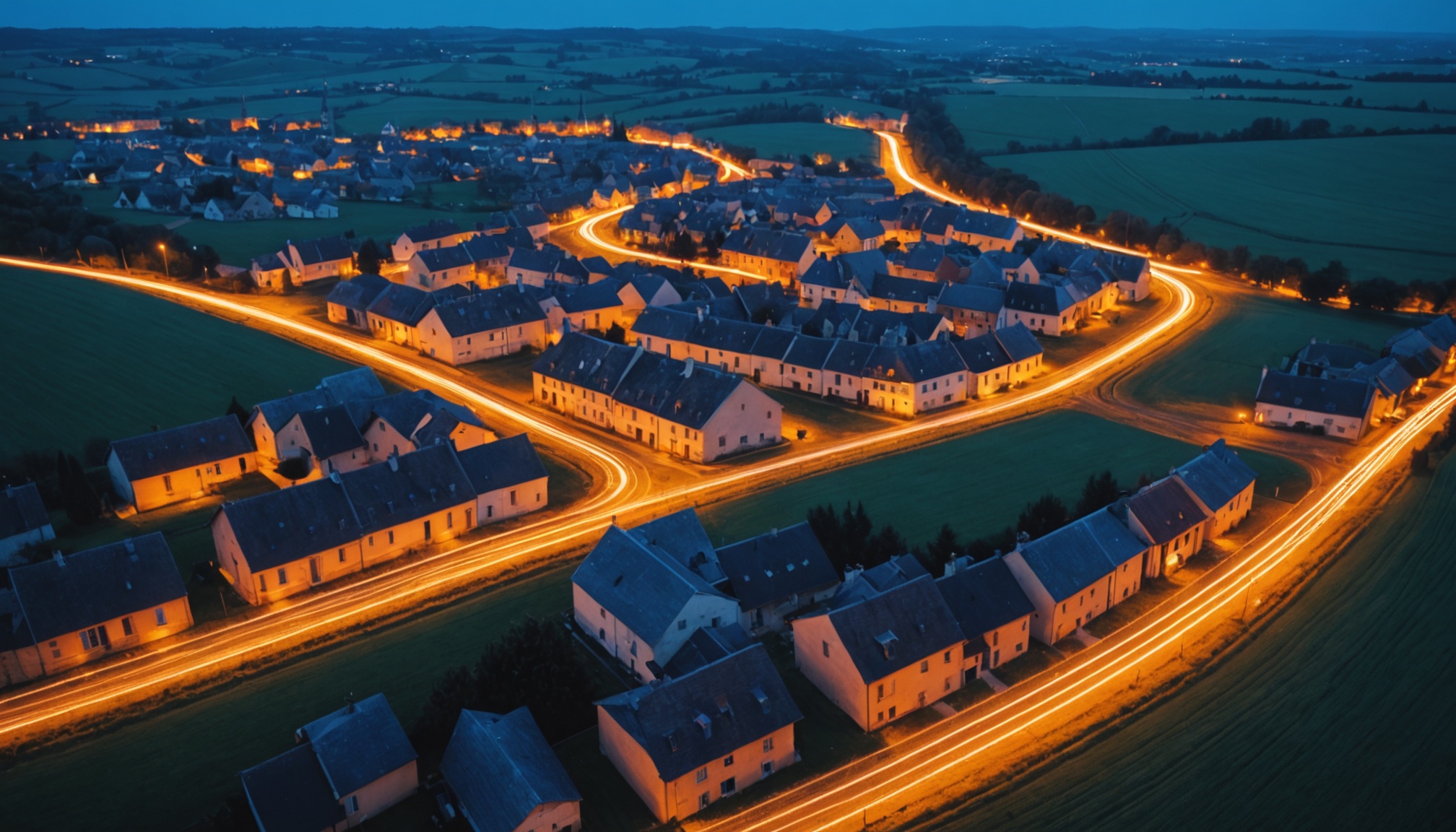
The fiber optic coverage in France crossed a new symbolic threshold in the summer of 2026. According to the latest figures from the Arcep (the French telecommunications regulator), more than 95% of homes and business premises in the country can now be connected to ultra-fast broadband. But this success hides a harsher reality for the 2.1 million households still without fiber: the financial aid that allowed them to get by in the meantime has just been suspended.
Where does fiber deployment in France currently stand?
Contents
By the end of June 2026, 43.1 million premises are connectable to fiber optic internet (FTTH) out of a total of 45.1 million homes and business premises counted in France, a coverage rate of 95.3%. This figure has been rising steadily for several years, driven by the France Very High Speed Broadband plan (Plan France Très Haut Débit). By the end of March 2026, the number of active fiber subscriptions stood at 27.7 million, a sign that the shift away from copper DSL continues at a steady pace in areas already covered.
Still, 2.1 million premises remain unconnectable, concentrated mostly in rural and mountain areas, where the cost of the “last mile” of cabling remains highest for operators.
The “Digital Cohesion of the Territories” aid program put on hold
This is where things get complicated for the households affected. The “Cohésion numérique des territoires” (Digital Cohesion of the Territories) program, which subsidized between €150 and €600 toward the purchase of an alternative solution (satellite kit, fixed 4G/5G box) while waiting for fiber to arrive, has just been suspended by the French government.
The reason lies in the original timeline: the program's budget had been calculated on the assumption that fiber would be rolled out nationwide by the end of 2025. Yet more than two million premises remain unconnected as of mid-2026, particularly in areas where the final hookup runs into technical or road-related obstacles. For the public and private services tasked with supporting these households, the digital divide between fiber-connected areas and dead zones is only widening.
What this means for households still without fiber
- A satellite kit now costs between €200 and €350 to purchase, with no state contribution.
- Monthly subscriptions for an alternative solution (satellite or fixed 4G/5G) remain priced at €35 to €65 per month.
- More than 2 million households relying on these stopgap solutions will now have to bear the full cost on their own.
- No official date has been announced for a possible resumption of the aid program.
Why the last mile remains so hard to close
France rolled out fiber first in densely populated areas, then in moderately populated areas through public and private tenders. The remaining 2.1 million premises often correspond to scattered housing, where the per-household connection cost can far exceed the national average. This final stretch also weighs on daily life: it slows the broader adoption of remote work in these areas and contributes, more broadly, to the digital productivity gap that several studies have identified between well-connected regions and rural areas.
Conversely, in areas already equipped with fiber, some French people are now choosing to ease up on their digital habits: a trend toward voluntary digital minimalism that stands in sharp contrast to the forced wait endured by households still unconnected. For the latter, a connection remains above all a practical necessity — administrative tasks, remote work, or distance learning — rather than a matter of comfort.
Frequently Asked Questions
How many households in France still don't have access to fiber?
According to the Arcep, about 2.1 million premises remained unconnectable to fiber optic internet at the end of June 2026, mainly in rural and mountain areas.
Does state aid for households without fiber still exist?
The “Cohésion numérique des territoires” program, which funded up to €600 toward an alternative solution, has been suspended. No resumption date has been announced.
What solutions remain available while waiting for fiber?
Affected households can turn to a satellite kit (€200 to €350 to purchase) or a fixed 4G/5G box, with a monthly subscription of €35 to €65, now without public subsidy.
Sources
- Arcep — Electronic Communications Market Observatory
- Maire-info — Suspension of aid for alternative internet solutions
- Megazap — Fiber optic internet: more than 95% of premises now connectable in France
Author Profile
Latest entries
 Food & Drink21 November 2026Beaujolais Nouveau: A Historically Low Harvest, Yet Sales Keep Climbing
 Finance20 November 2026Consumer Credit: Mini-Loans, Split Payments, and Overdrafts Face Tighter Rules
 Planet15 November 2026CO2 Emissions: Why Transportation Remains France's Climate Blind Spot
 Artificial Intelligence12 November 2026Imagine Enterprise: IBM and Microsoft Team Up on AI Agents for Large Businesses
This article was written with the help of artificial intelligence. Editorial policy