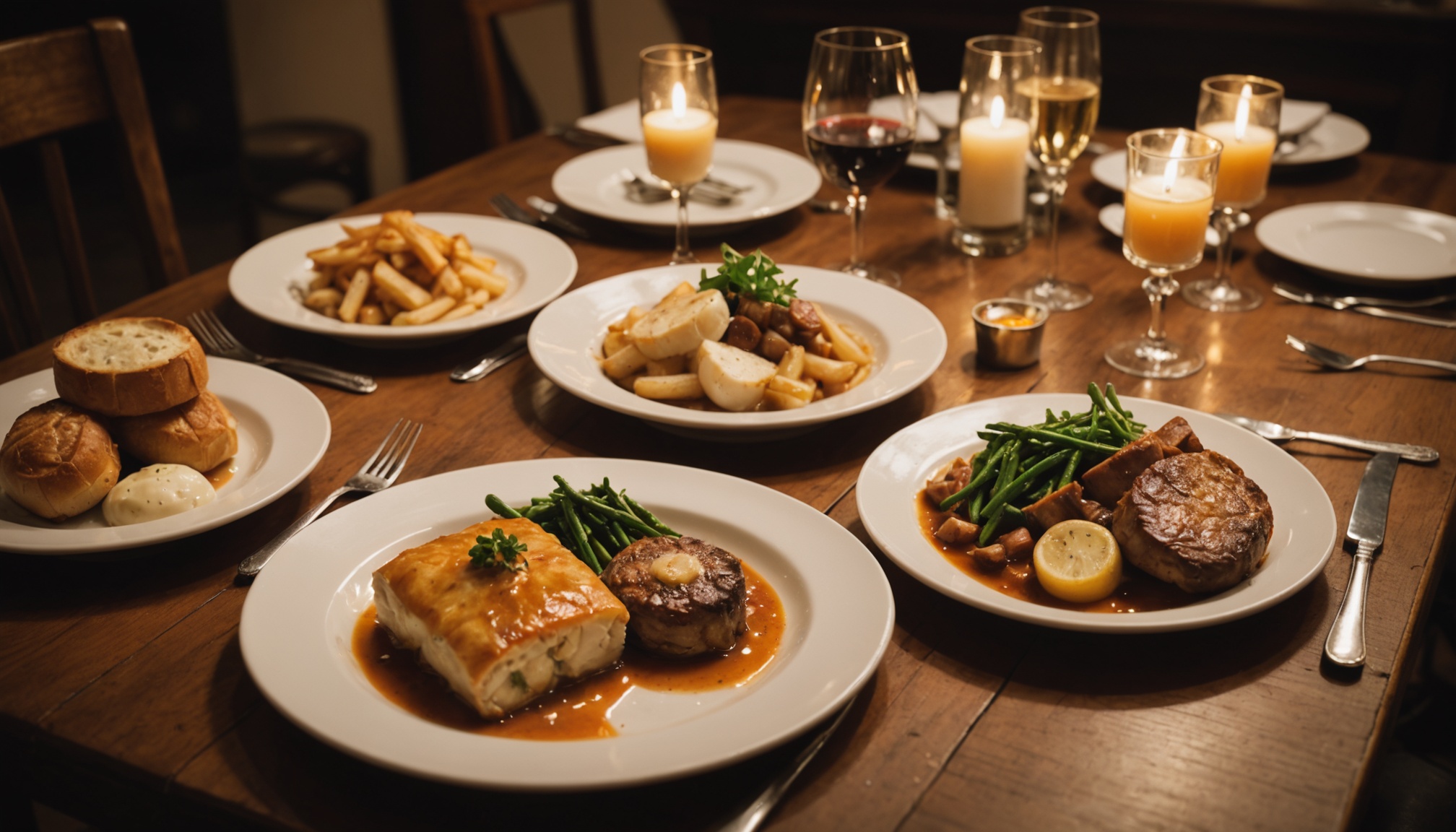
Behind the buzz of restaurant openings seen every week in France's major cities, the numbers tell a very different story. Traditional dining became, in the second quarter of 2026, the hardest-hit industry in France, with 997 bankruptcies, up 6.4 percent year over year, according to data from Altares. It's a paradox explained by a sector caught between rising costs and more budget-conscious customers.
A Sector Under Pressure on Every Front
Contents
Fast food isn't spared either: court-ordered liquidations there are up 13.9 percent, driven by market saturation and the growing weight of commissions charged by delivery platforms. More broadly, the entire café-hotel-restaurant (CHR) sector recorded 2,390 bankruptcies in the second quarter of 2026 alone, a 9.5 percent increase year over year. The sector posted almost no growth over the first five months of the year.
Profitability has also eroded: the average net income of a restaurant dropped from 11 percent of revenue in 2023 to just 3 percent in 2024. The direct consequence for the most fragile establishments: according to the Banque de France (France's central bank), barely 3 out of 10 restaurants are now considered eligible for bank refinancing, which severely limits their ability to absorb a cash-flow shock.
The Bistro Comeback: A Response to the Crisis
Faced with this economic pressure, a deeper trend is taking shape in French kitchens: the neo-bistro. Revisited regional recipes, local sourcing, shorter menus, and tightly controlled prices are becoming the new benchmarks for restaurant owners looking to protect their margins without losing customers. Popular “bouillons” (budget-friendly soup kitchens turned casual dining spots) and brasseries offering hearty food at affordable prices illustrate this movement, also fueled by customers' desire for nostalgia and togetherness rather than a costly fine-dining experience.
- 997 bankruptcies in traditional dining in Q2 2026 (+6.4 percent year over year)
- 2,390 cumulative bankruptcies in the café-hotel-restaurant sector in Q2 2026 (+9.5 percent)
- Average net income of a restaurant: 3 percent of revenue in 2024, compared with 11 percent in 2023
At the same time, high-end dining is holding up better than expected: the Michelin Guide recognized 668 restaurants in France in 2026, including 62 new entries, up from 639 two years earlier. A sign that the crisis is mainly hitting mid-range and fast-food establishments, caught between fixed costs and household budget trade-offs, while the two extremes of the market — affordable bistros and Michelin-starred restaurants — each find their own audience.
For industry professionals and consumers alike, these shifts tie into broader trade-offs around household food budgets, the financial health of small businesses, and the key indicators of the French economy in 2026.
Frequently Asked Questions
Why is traditional dining so hard-hit by bankruptcies?
The sector is grappling with rising fixed costs (rent, raw materials, energy), hiring difficulties, and customers cutting back on dining out, which is especially damaging for establishments whose net income is already thin.
Is the neo-bistro really cheaper for customers?
Generally, yes: this format relies on a tighter menu, seasonal, locally sourced ingredients, and less costly preparation, allowing for better-controlled prices than a traditional fine-dining menu, while still maintaining a strong culinary identity.
Is high-end dining struggling too?
No, it's holding up better: the Michelin Guide recognized more restaurants in 2026 than it did two years earlier. Bankruptcies are mainly affecting mid-range traditional dining and fast food, not Michelin-starred establishments.
Sources
Author Profile
Latest entries
 Planet15 November 2026CO2 Emissions: Why Transportation Remains France's Climate Blind Spot
 Artificial Intelligence12 November 2026Imagine Enterprise: IBM and Microsoft Team Up on AI Agents for Large Businesses
 Economy11 November 2026Livret A Rate: Understanding How It's Calculated and Its Limits
 Shopping8 November 2026Black Friday: Key Dates and the Budget French Shoppers Are Planning
This article was written with the help of artificial intelligence. Editorial policy