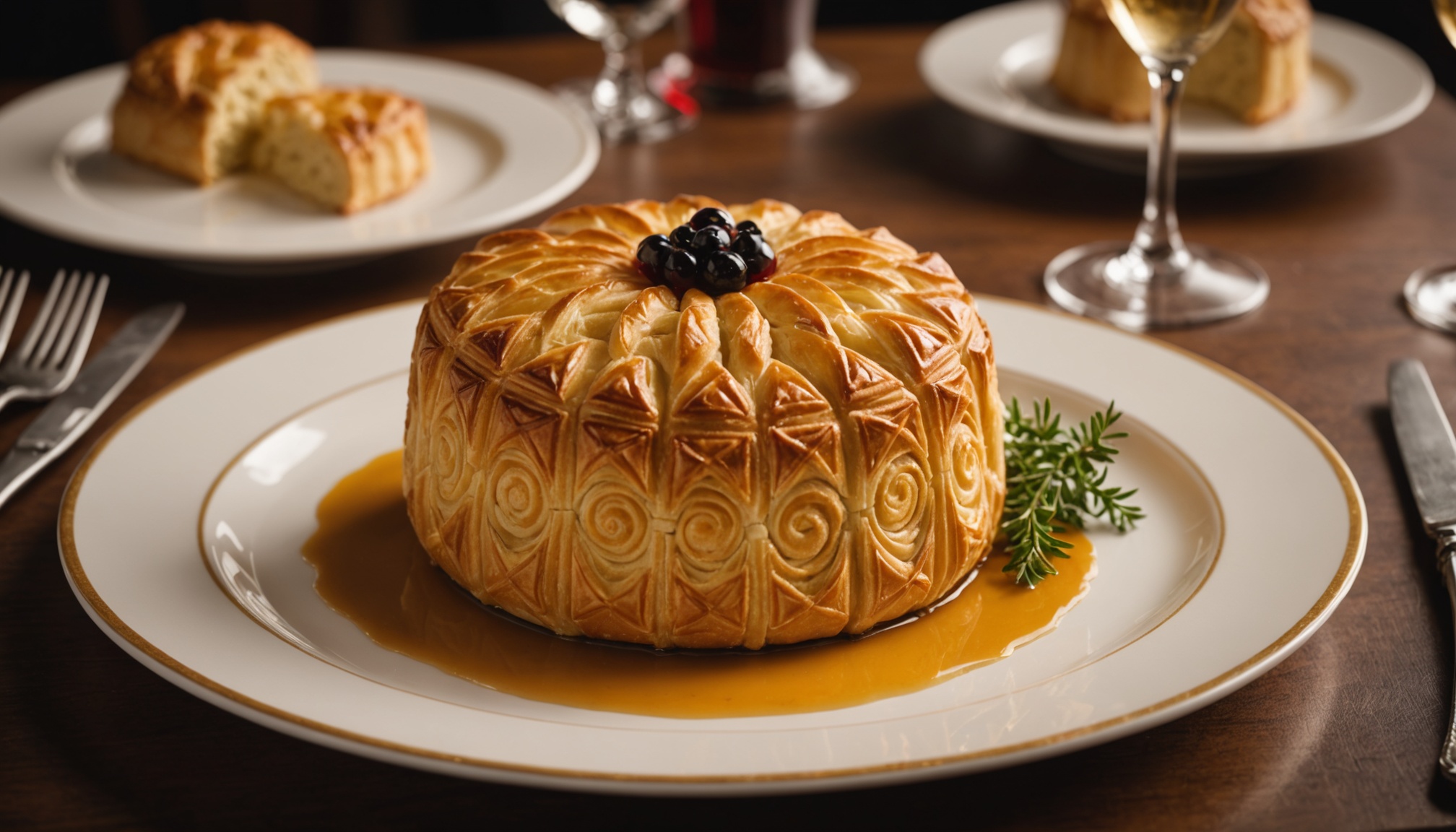
Long relegated to wedding buffets or deli counters, pastry-wrapped charcuterie dishes are making a strong comeback on restaurant menus in France. Pâté en croûte, meat pies, vol-au-vent, and beef Wellington are once again becoming centerpiece dishes, driven by a generation of chefs who turn pastry into a true medium of expression.
Pastry Becomes an Art Form in Its Own Right
Contents
This movement now has a name: “crust art.” It refers to the decorative work done on the crust—cut-out patterns, braiding, leaves, or designs engraved directly into the dough. The crust is no longer just a simple shell meant to protect the filling, but a standalone, almost sculptural medium, meant to be enjoyed as much with the eyes as with the palate.
Several Paris chefs illustrate this trend with reinvented versions, some vegetarian: a potato cake in pastry crust by Simon Horwitz at the restaurant Elmer, a celery root pithivier at Garance, or a pigeon pie created by chef Christophe Pelé at La Clarence. These variations show that a cuisine historically centered on meat can also adapt to new dietary habits.
A Broader Comeback of Brasserie Classics
The phenomenon goes beyond pâté en croûte alone. Eggs with mayonnaise, veal blanquette, stuffed cabbage, pot-au-feu, roast chicken, and tarte Tatin—dishes long considered the preserve of touristy brasseries—are reappearing in lighter, more precise versions, made with carefully selected local ingredients. This movement complements other trends currently reshaping the menus of French restaurants, spanning fermentation and flexitarianism.
This celebration of French culinary heritage fits into a broader movement within French gastronomy, where chefs seek to surprise as much as to reassure, playing on nostalgia as much as on technique.
Why This Trend Is Winning Over Restaurants
- It lets chefs show off demanding technical skill, since achieving a thin, even crust is particularly tricky.
- It fits into restaurants' pursuit of budget discipline: these braised or pastry-wrapped dishes make the most of less expensive cuts while still offering a polished presentation.
- It answers customers' desire for comfort and nostalgia, as they look for familiar dishes reinvented rather than overly experimental creations.
- As with other recent food trends built around sweet-and-savory pairings, it blends heritage and innovation on the plate.
Frequently Asked Questions
Is pâté en croûte becoming a festive dish only again?
No, it is increasingly appearing as a full-fledged menu item in restaurants, not just for special occasions or at deli counters.
Are there vegetarian versions of these pastry-wrapped classics?
Yes, several chefs now offer vegetable-based versions, such as a potato cake in pastry crust or a celery root pithivier, in place of meat.
What exactly is “crust art”?
It's the name given to the decorative work applied to the dough of these pastries: cuts, braiding, or engraved patterns that turn the crust into a visual and technical element in its own right, as already highlighted by fine French dining, much like the work praised at the Cartier Foundation around gastronomy.
Sources
- Le JDD – The Comeback of Pastry-Wrapped Charcuterie
- Chefsquare – Food Trends Set to Define 2026
- METRO – Trends to Watch in Pastry
Author Profile
Latest entries
 Food & Drink21 November 2026Beaujolais Nouveau: A Historically Low Harvest, Yet Sales Keep Climbing
 Finance20 November 2026Consumer Credit: Mini-Loans, Split Payments, and Overdrafts Face Tighter Rules
 Planet15 November 2026CO2 Emissions: Why Transportation Remains France's Climate Blind Spot
 Artificial Intelligence12 November 2026Imagine Enterprise: IBM and Microsoft Team Up on AI Agents for Large Businesses
This article was written with the help of artificial intelligence. Editorial policy