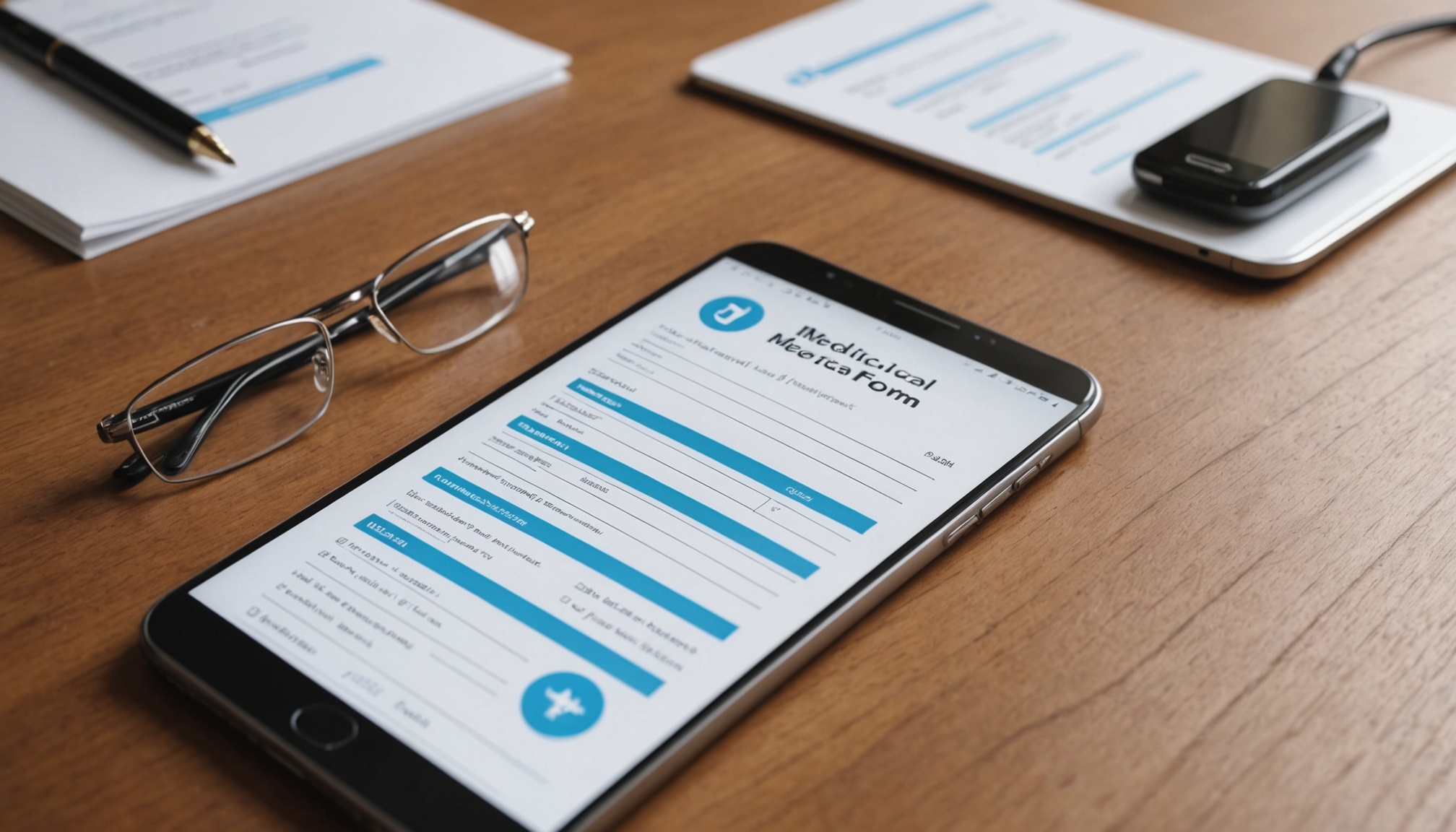
Sending a paper medical claim form to your health insurance fund without going through the post office is now possible with the ameli app. Since September 7, 2026, policyholders in France can photograph the form once it has been filled out and signed by their healthcare provider, then send it directly from their smartphone (iOS and Android), in the app's dedicated section. It's a modest but concrete change, part of the broader push to simplify administrative procedures in France.
A Process Designed for Cases That Are Still “Paper-Based”
Contents
The vast majority of healthcare reimbursements in France already go through automatically between healthcare providers and the national health insurance system (l'Assurance Maladie), via the Vitale card and electronic transmission. But some situations still fall outside this system: a visit to a practitioner without the right equipment, care received abroad, or a Vitale card that isn't accepted. Until now, policyholders had to send the original document by mail in these cases. The new ameli app feature avoids that step, by simply scanning the medical claim form with a photo before sending it.
How to Submit Your Medical Claim Form by Photo
- Open the ameli app and go to the section dedicated to sending documents.
- Take a photo of the front of the medical claim form, properly filled out and signed by the healthcare provider.
- Check that the photo is legible before confirming the submission.
- Keep the original for a few weeks, until the reimbursement has been processed.
Another related new feature: a follow-up email can now keep policyholders informed about the progress of their reimbursement, in addition to the usual tracking available in their ameli account.
A Broader Shift in Public Services
This simplification isn't an isolated case. It echoes other recent changes affecting health and administrative procedures in France. On the employment side, sick leave for civil servants now requires a secure form to limit fraud, proof that digitization is also advancing on the most sensitive documents. On the medical side, the announced end of paid skip-the-line teleconsultation options also points toward simpler, more equitable access to care. More broadly, these digital initiatives add to the rise of a sovereign AI assistant at the heart of French public services, a sign that artificial intelligence and digitization are gradually reshaping how the French relate to their administration.
What This Means in Practice for Policyholders
For users, the main benefit is saving time: no more printing an envelope, hunting for a stamp, or waiting several days for the mail to arrive. Processing of the claim can start as soon as the health insurance fund receives the photo. That said, this remains a complement to existing systems (the Vitale card, electronic transmission), not a replacement: paper medical claim forms account for only a minority of visits, but that's precisely where the administrative hassle was greatest for policyholders.
Frequently Asked Questions
Do I need to keep the original medical claim form after sending it by photo?
Yes, it's recommended to keep the original for a few weeks, until the health insurance fund processes the request and issues the reimbursement.
Does this feature replace the Vitale card?
No. It only applies to cases where automatic electronic transmission via the Vitale card wasn't possible, for example for care received abroad or from a provider without the right equipment.
How can I check the status of my reimbursement after sending the photo?
Tracking is still available in your ameli account, and a follow-up email can now keep you informed about the progress of your claim.
Sources
- ameli.fr — Policyholder news, fall 2026
- monsuivimedical.fr — Medical claim forms via the app and follow-up email
- economie.gouv.fr — What's changing in September 2026
Author Profile
Latest entries
 Artificial Intelligence12 November 2026Imagine Enterprise: IBM and Microsoft Team Up on AI Agents for Large Businesses
 Economy11 November 2026Livret A Rate: Understanding How It's Calculated and Its Limits
 Shopping8 November 2026Black Friday: Key Dates and the Budget French Shoppers Are Planning
 Sports6 November 2026Men's Road Bike: How to Choose and Maintain One
This article was written with the help of artificial intelligence. Editorial policy