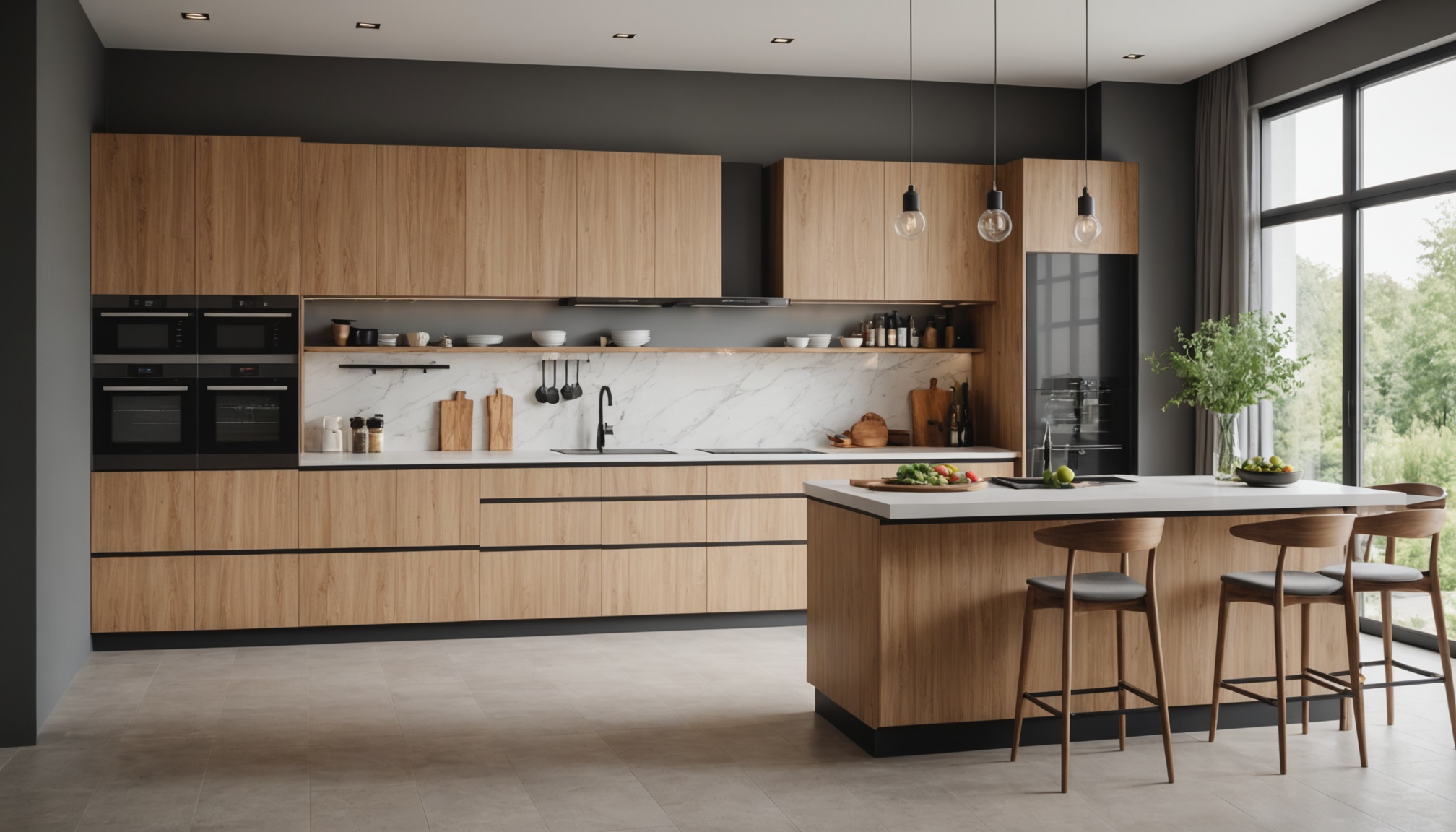
Rethinking your fitted kitchen isn't just about picking cabinet fronts and a countertop color. It's a technical, financial, and ergonomic project that commits you for fifteen to twenty years: if poorly planned, it can leave you with hard-to-reach storage, undersized appliances, or a quote riddled with bad surprises. Here are the key points to watch before you start.
Think About the Layout Before the Style
Contents
The first thing to consider isn't aesthetics but space. Kitchen designers work around the work triangle: the cold zone (refrigerator, storage), the prep-and-cooking zone, and the cleanup zone should form a triangle that's as balanced as possible, with roughly 90 cm between each point so you can move around without getting in your own way. Depending on the shape of the room, an L-shaped layout works well for medium-sized spaces, while an I-shaped layout is better suited to long, narrow rooms. A well-organized set of smart home devices increasingly makes this kind of planning easier, too, as sensors and apps help visualize traffic flow before renovation work begins.
To get an initial sense of today's layout trends, browsing kitchen cabinets at IKEA USA lets you compare standard configurations and fine-tune your own project before requesting a personalized quote.
Appliances: Prioritize Energy Efficiency
Refrigerators, ovens, dishwashers, and range hoods weigh heavily on the electricity bill over time. Every appliance is required to display its energy label, rated from A (efficient) to G (inefficient) since the 2021 reform that did away with the old A+++ ratings. Comparing this rating before buying, rather than relying solely on the sticker price, remains the smartest habit over the appliance's lifespan.
Materials and Installation Method
Laminate, quartz, or solid wood countertops, lacquered or melamine cabinet fronts: each material comes with its own cost, upkeep, and resistance to moisture. The installation method matters just as much: custom installation by a craftsman costs more than a kit made of standard cabinets, but it adapts to the room's real constraints (water lines, electrical panel, non-right angles). This is also a good time to check available grants: the recent changes to MaPrimeRénov' by measure (France's government grant program for home energy-efficiency upgrades) mainly concern heating and hot water, but they're a reminder that it's often smarter to plan a fitted kitchen as part of a broader home energy renovation project, since the water and electrical systems are being redone anyway.
The Quote: Where Everything Gets Decided
This is also the point most often overlooked. A fitted kitchen quote should separately itemize the on-site measurements, the list of cabinets and appliances, the sink, any related work (plumbing, electrical), installation, delivery, and payment terms. Check in particular that the delivery date for the components and the date installation is finished aren't conflated in the contract: that's a frequent source of disputes. Never sign a purchase order before a measurement technician has visited the site, especially if the proposed layout is custom-built.
- Insist on an itemized, line-by-line quote rather than a flat lump sum
- Verify the actual date and location of signing (right of withdrawal)
- Compare at least two quotes before deciding
- Budget an extra 10 to 15% for unexpected costs
Frequently Asked Questions
How long does installing a fitted kitchen take?
Plan on one to two weeks on average between delivery of the components and completion of installation, not counting manufacturing lead times, which can run several weeks for custom work.
Should the electrical wiring be redone at the same time?
It's strongly advisable if the wiring is more than fifteen years old or if there aren't enough outlets for today's appliances: it's much simpler to handle before the cabinets go in than after.
How can you keep costs down without sacrificing quality?
Favor standard cabinets over custom ones for less visible elements, and put the budget toward the countertop and appliances, which see the most daily wear and visibility.
Sources
- ADEME (France's environment and energy management agency) — How to Choose the Right Appliances
- UFC Que Choisir Var-Est (a French consumer protection association) — Visiting and Buying a Fitted Kitchen In-Store
Author Profile
Latest entries
 Artificial Intelligence12 November 2026Imagine Enterprise: IBM and Microsoft Team Up on AI Agents for Large Businesses
 Economy11 November 2026Livret A Rate: Understanding How It's Calculated and Its Limits
 Shopping8 November 2026Black Friday: Key Dates and the Budget French Shoppers Are Planning
 Sports6 November 2026Men's Road Bike: How to Choose and Maintain One
This article was written with the help of artificial intelligence. Editorial policy