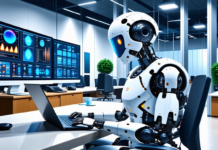
In short: AI assistants promise to revolutionize software development, but the technical reality remains far more complex than marketing pitches suggest. Developers know that these tools don't replace human expertise: they shift it. The real limitations — limited contextual memory, algorithmic bias, lack of business understanding — remain largely overlooked. Between automating repetitive tasks and the perpetual need for supervision, AI becomes a demanding co-pilot, not a miracle solution. Those who benefit from it adopt a hybrid stance: calibrated trust, heightened vigilance, and accepted responsibility. AI-assisted development isn't a withdrawal from the profession, but an evolution that demands more discernment than ever.
🎯 Why AI Assistants Don't Do What We Think: Beyond the Replacement Myth
Contents
Since the rise of tools like Copilot and its competitors, one question keeps coming up obsessively: will AI assistants replace developers? This concern, widely amplified by the media, rests on a fundamental misunderstanding. Business leaders imagine a scenario where thousands of lines of code spring from a simple text command, while experienced developers know full well that reducing the profession to typing code amounts to a caricature.
In reality, software development encompasses dimensions that machines cover only partially. Software architecture — that overall vision allowing an application to support growing loads, integrate heterogeneous components, and withstand security flaws — remains a deeply human act. Defining how microservices and APIs will communicate, anticipating a platform's scalability, weighing on-premise infrastructure against hybrid cloud: these are decisions that require an understanding of business context that AI lacks.
Translating business needs into technical specifications illustrates this gap well. A developer must grasp how the banking or insurance sector works, incorporate evolving regulatory constraints, and secure sensitive data flows. AI-assisted development specifically requires this ability to contextualize, a skill that statistical automation does not possess.

🔍 The Myth of Automatically Generated Code
When Copilot produces 50 lines of code in a few seconds, impressed onlookers forget the essential point: this advanced draft requires rigorous validation. AI excels at reproducing statistically probable patterns, not at inventing innovative solutions or meeting a project's hidden requirements.
Take a concrete example. A developer asks their AI assistant to generate a cache management function. The tool produces syntactically correct code that works on test data. But it doesn't know that the application must handle cache evictions in a highly concurrent environment, or that the retention policy must comply with European regulation. Without this business understanding, code “that works” quickly becomes a source of technical debt and vulnerabilities.
That's why peer review becomes crucial when code comes from an AI. Yet without solid experience, it's particularly difficult to judge the reliability, compliance, and business relevance of a generated solution. This verification remains human, and it cannot be bypassed without risking serious incidents — like the one involving SaaStr's founder, who saw his production database entirely wiped out last July while using Replit's AI to develop a new application.
💡 The Real Technical Challenges Hidden Behind Marketing Promises
Beyond commercial rhetoric, AI assistants run into very real technical limitations. These challenges won't disappear quickly, and understanding why is essential to properly assess their usefulness and risks.
The limited contextual memory is one of the most serious. Large language models (LLMs) process a finite number of tokens — these fragments of text or code. A large codebase, particularly in complex architectures, quickly exceeds this limit. AI then only “sees” isolated portions, losing the overall view of the system. Imagine a developer working on a project with blinders on: they would clearly see the detail of a function, but not how it fits into the overall orchestration. That's precisely the handicap of AI assistants when facing large-scale projects.
Algorithmic biases reinforce this fragility. AI models train on public data (GitHub, Stack Overflow), which reflects majority practices, not best practices. An assistant will naturally generate popular code, even if it's not optimal for your context. The training data contains outdated patterns, documented anti-patterns, and even well-known security vulnerabilities. AI learns to reproduce what it “sees,” without critical discernment.
AI also favors plausibility over accuracy. A model generates what seems statistically probable, not necessarily what's true. This means AI can suggest a library, an API, or a function that simply doesn't exist, but that “sounds” right. These technical hallucinations are particularly dangerous in sensitive sectors like healthcare, finance, or industry, where errors come at a high cost.
🚨 When Optimization Becomes a Problem
Developers constantly seek to optimize: less latency, less memory consumption, fewer network requests. AI assistants do the same, but without understanding the real stakes. Code “optimized” by AI can reduce CPU load at the cost of catastrophic readability or degraded maintainability.
This tendency to look for shortcuts is particularly problematic. AI produces code that “works,” but that strays from quality standards, best practices, or the project's specific requirements. AI programming assistants fail precisely because they ignore these contextual subtleties.
Add to this the delicate question of ethics and transparency. AI generated based on training data raises legal questions: who is responsible if the code unintentionally borrows from a library under a restrictive license? Are the models trained on proprietary code? These ethical questions go beyond pure technique, but they shape the future of assisted development.
🛠️ How Real Developers Avoid the Pitfalls and Come Out Ahead
Professionals who integrate AI into their practice move faster, reduce technical debt, and devote more time to strategic issues. But this doesn't happen by magic: it requires strict discipline and an adapted mindset.
Prompt engineering applied to development changes the game. Rather than throwing a vague question at AI, experienced developers formulate precise instructions: project context, expected structure, technical constraints, existing dependencies. This discipline transforms AI from a simple snippet generator into a true productivity tool. Each request becomes a calibrated negotiation between what's asked and what's expected in return.
Critical thinking also becomes essential. AI proposes an implementation? The developer must read it line by line, compare it against their team's best practices, and verify its security and performance. Without this human filter, the risk of introducing flaws or technical debt grows exponentially. That's why AI's real impact on productivity depends on the maturity of the developers who use it.
Finally, some innovative organizations use AI as a virtual mentor for junior developers. A young developer combines classic learning (documentation, peer review, mentoring) with an AI tool that explains algorithms, comments on functions, and illustrates concepts. This hybrid approach accelerates skill development without replacing human mentoring — it amplifies it.
🎓 Software Architecture: A Human-Only Domain
Defining a modular structure, organizing event flows, anticipating scalability: these are strategic decisions that AI assistants only partially master. AI can generate code fragments that comply with a given architecture, but it cannot “steer the trajectory” of a project.
A seasoned developer must weigh thousands of variables: infrastructure cost, acceptable latency, organizational complexity, future scalability. These trade-offs rely on experience accumulated over years, not on statistical patterns. That's why software architecture remains a clearly human stronghold, even with the arrival of AI assistants.
Cybersecurity reinforces this point. Security tasks require constant vigilance and a deep understanding of contemporary threats. AI can suggest input validation or an encryption function, but it doesn't “see” emerging vulnerabilities or the sophisticated attack vectors that criminals design every day.
📋 Business Intelligence and Compliance: Impenetrable Ramparts
Regulations increasingly govern the use of AI itself: data protection, transparency, model governance. The developer becomes the guarantor of responsible practice — a role no statistical model can take on. When a banking application must comply with the GDPR (the European Union's General Data Protection Regulation) or sector-specific compliance standards, it's a human who must validate the solution, not an AI.
Communication and technical explanation further strengthen the value of developers. Explaining an API constraint to a business team, convincing a management committee, mentoring junior developers: these are relational and pedagogical skills that AI doesn't have. These interpersonal qualities are, moreover, becoming increasingly critical as the technical side becomes automated.
🔐 Governance and Accountability: Why Humans Can't Step Aside
Building robust AI assistants requires rigorous governance and absolute clarity about responsibility. No serious company can leave AI alone at the controls without putting structuring safeguards in place.
Every organization must first define an explicit usage policy that answers key questions: who oversees the use of these tools? Who validates the generated code? What functional scopes are authorized? In what context should AI be set aside? These considerations, which go beyond the strictly technical scope, make it possible to implement proactive AI governance while managing risk.
Safeguards must be established, based on zero-trust principles (trusting nothing by default) and proven practices like Test-Driven Development (TDD). Small increments make it possible to maintain control over the process while benefiting from automation. Vector databases and Retrieval-Augmented Generation techniques offer precisely better control over the context fed to assistants.
One often-forgotten point bears repeating: AI doesn't write its own code, it only assists. Whatever its future autonomy, the final result remains a human responsibility. This responsibility cannot be delegated to a machine, however sophisticated. In the event of data loss, a security breach, or degraded behavior, responsibility must clearly fall on an identifiable human.
⚖️ Ethics and Transparency in Generated Code
AI ethics isn't limited to abstract statements. It takes shape in every line of generated code. An AI assistant can reproduce biases present in its training data — subtle discrimination in scoring algorithms, lack of diversity in tested cases, hidden assumptions about users.
Responsible developers must therefore actively audit generated code to detect these biases. This means testing on diverse data, checking edge cases, and questioning implicit assumptions. It's extra work, but it's the price of integrity.
Add to this the question of transparency. When an application uses AI-generated code, do end users have the right to know? Should it be disclosed that a given decision was influenced by an automated assistant? These ethical questions will shape trust in tomorrow's applications.
🚀 The Future: Smart Democratization Rather Than Replacement
Looking toward 2026 and beyond, the real change won't be the replacement of developers, but the controlled democratization of development. Just as smartphones democratized photography — anyone can now capture and share quality images — generative AI will gradually open up the world of coding to a wider population.
This democratization doesn't mean anyone can become a developer without training. It means that people from other professions — product managers, data analysts, business engineers — will be able to quickly prototype solutions without relying entirely on traditional development teams. This creates new needs: training these hybrid profiles, supervising their output, and integrating their solutions into robust systems.
Experienced developers will therefore see their role evolve: less mechanical coding, more advising, supervising, and training. Autonomous virtual assistants like AutoGen illustrate this trend toward intelligent task orchestration, where the developer becomes less an executor of lines of code and more a coordinator of an automation chain.
This evolution is part of a logic of augmenting human capabilities rather than replacing them. The software development of the future will rely on the intelligent pairing of AI's efficiency with the moderation of human expertise. The most powerful tools will be those that amplify the strengths of high-performing teams, not those that try to bypass human judgment.
🌍 Toward a Collaborative and Responsible AI Ecosystem
The real revolution isn't technical, it's cultural and organizational. The companies that succeed will be those that accept AI as a co-pilot — a powerful but fallible assistant — rather than as a miracle solution.
This means investing in training developers to use AI tools in a healthy and critical way. It also means defining clear ethical standards, rigorous audit procedures, and accepted responsibility. Open and transparent AI agent solutions also play a crucial role in this transition, allowing organizations to retain control and understanding of what's happening under the hood.
Developers who embrace these tools now — testing them, exploring their limits, building safeguards — will be at the forefront of defining how AI integrates into software engineering. This familiarity doesn't make anyone obsolete: it makes them more valuable, because they deeply understand what can and cannot be expected from a machine.
Ultimately, the challenge is not to passively undergo this transformation, but to guide it intelligently. Organizations that succeed will see their technical teams gain in agility, strategic clarity, and accountability. Others, who try to force complete replacement or ignore AI out of denial, risk gradually marginalizing themselves.
Author Profile
Latest entries
 Food & Drink21 November 2026Beaujolais Nouveau: A Historically Low Harvest, Yet Sales Keep Climbing
 Finance20 November 2026Consumer Credit: Mini-Loans, Split Payments, and Overdrafts Face Tighter Rules
 Planet15 November 2026CO2 Emissions: Why Transportation Remains France's Climate Blind Spot
 Artificial Intelligence12 November 2026Imagine Enterprise: IBM and Microsoft Team Up on AI Agents for Large Businesses
This article was written with the help of artificial intelligence. Editorial policy