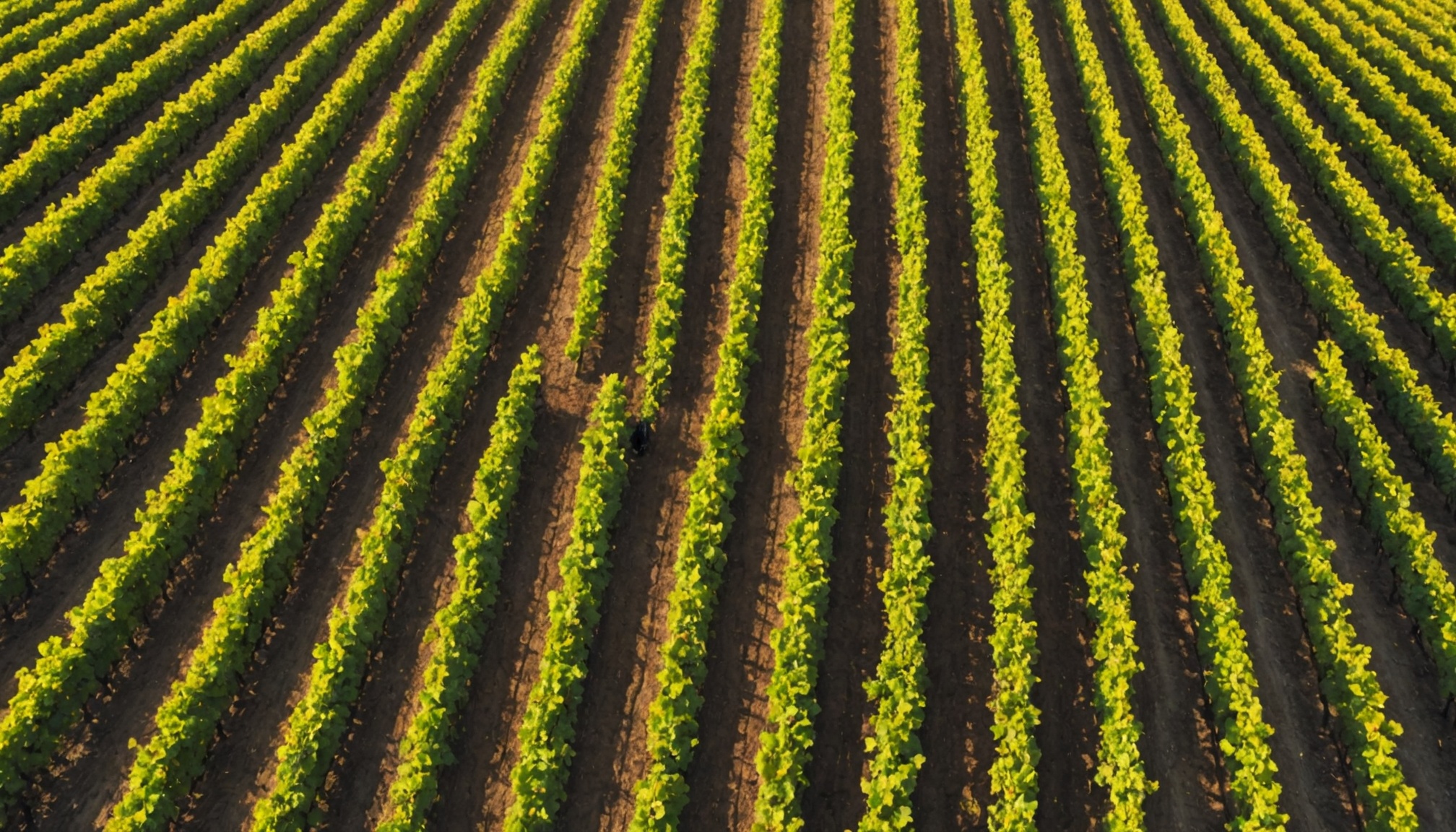
France's wine harvest is shaping up to be one of the weakest in its recent history. According to official figures from the French Ministry of Agriculture's statistics office (Agreste), published on September 7, production for 2026 is estimated at 33.8 million hectoliters, a level not seen since 1957.
This volume marks a 6% decline from 2025 (35.9 million hectoliters), itself already a small harvest, and a 17% drop below the five-year average (40.6 million hectoliters). The 2026 grape harvest confirms a trend that was already underway in previous years.
Two Compounding Causes
Contents
Agreste points to two distinct factors. On one hand, a structural reduction in the area of French vineyards, on the order of 2.5% per year, linked to vine removal. On the other hand, extreme weather conditions: drought and summer heat waves caused localized scorching of the grapes, premature leaf drop, and berries drying out even before harvest.
This drought is not an isolated event: it extends a phenomenon already documented elsewhere, with more than 1,400 rivers running dry or experiencing broken flow observed this summer in France, along with an economic toll from heat waves that is already weighing heavily on several agricultural sectors.
A Wine Map Being Redrawn
The most striking aspect of this vintage lies less in the national figure than in the disparities between regions. In Champagne, the harvest collapses by 50%, to 1.3 million hectoliters compared with 2.5 million in 2025 — the lowest average grape cluster weight in twenty years. In Burgundy, losses on pinot noir exceed 50% in several areas. Cognac declines more moderately, by 6%, to 7.5 million hectoliters.
Conversely, Languedoc-Roussillon grows by 5%, despite a 5% loss in vineyard area, driven by better yields per hectare. Overall, PGI wines gain 4% (10.3 million hectoliters) while PDO wines decline by 10% (14.2 million hectoliters). This contrast illustrates how climate change is redrawing France's wine map, favoring certain southern wine regions at the expense of historic vineyards further north or in more continental areas.
This phenomenon fits into a broader climate context: forecasts around a possible particularly intense El Niño episode raise concerns that the coming seasons may not make it any easier for winegrowers to return to normal.
What Does This Mean for the Industry and Consumers?
Such a tight harvest inevitably weighs on the volumes available for sale, in an industry already weakened by declining domestic consumption. Industry professionals expect upward pressure on certain prices, particularly for the hardest-hit appellations such as Champagne, while PGI wines could instead gain market share thanks to more abundant volumes.
For now, no official announcement of specific support for the industry has been made by the Ministry of Agriculture following the release of these figures.
Frequently Asked Questions
What is the volume of France's 2026 wine harvest?
According to Agreste, production is estimated at 33.8 million hectoliters, the lowest level recorded since 1957.
Why is Languedoc-Roussillon growing while the national average is declining?
Thanks to better yields per hectare, which offset a 5% loss in vineyard area in the region, resulting in a 5% increase in overall production.
Will this decline drive up the price of wine?
Industry professionals anticipate upward pressure on the hardest-hit appellations such as Champagne, but no widespread price increase has been confirmed at this stage.
Sources
Author Profile
Latest entries
 Artificial Intelligence12 November 2026Imagine Enterprise: IBM and Microsoft Team Up on AI Agents for Large Businesses
 Economy11 November 2026Livret A Rate: Understanding How It's Calculated and Its Limits
 Shopping8 November 2026Black Friday: Key Dates and the Budget French Shoppers Are Planning
 Sports6 November 2026Men's Road Bike: How to Choose and Maintain One
This article was written with the help of artificial intelligence. Editorial policy