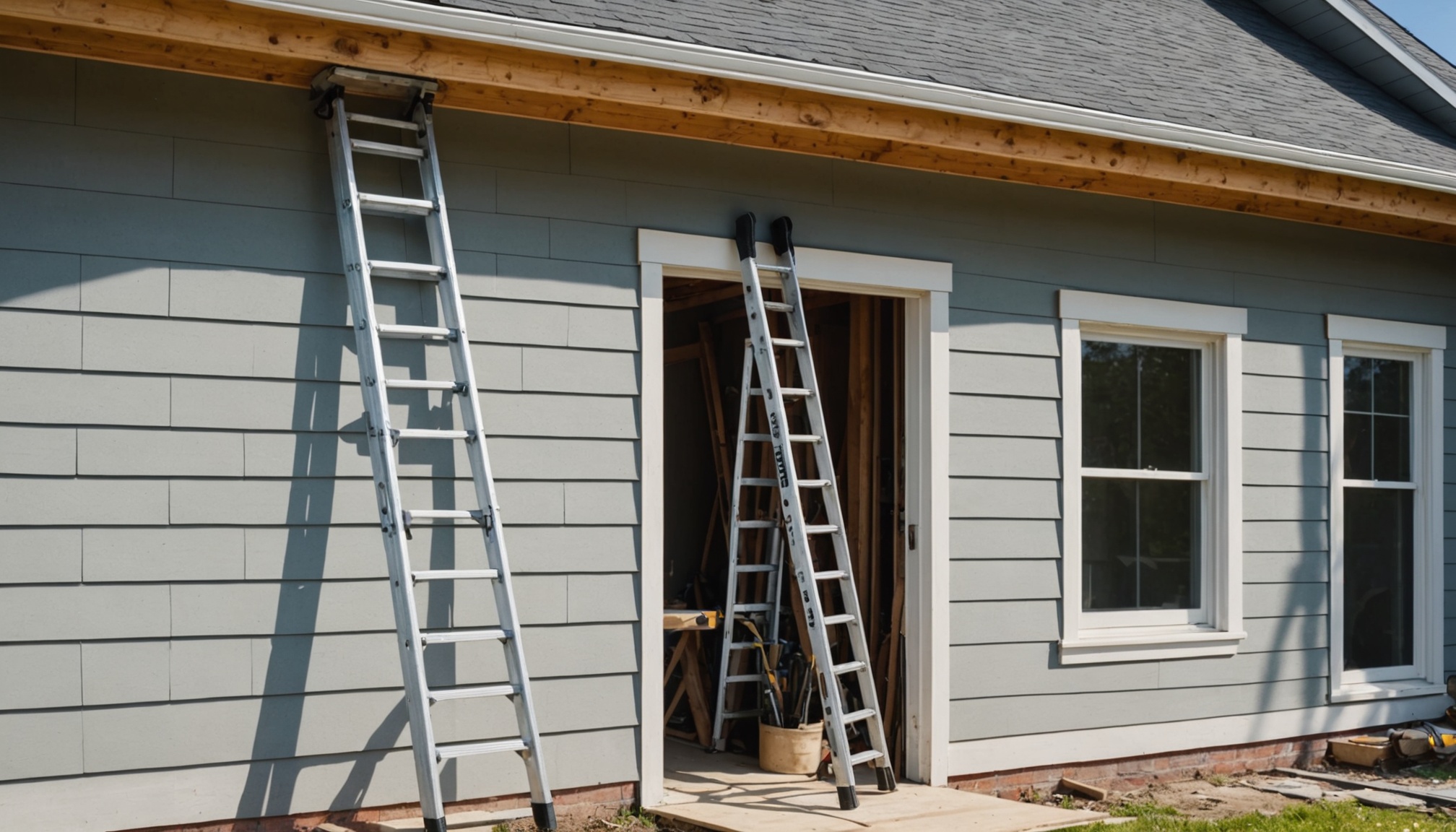
Repainting a ceiling, cleaning a gutter, redoing a facade's stucco: every year, thousands of do-it-yourselfers pull a ladder, stepladder, or scaffolding out of the garage without realizing it's one of the most accident-prone jobs in home improvement. Ladders, stepladders, and scaffolding are not interchangeable, and most falls at home come less from faulty equipment than from choosing the wrong tool or a sloppy setup. Here are the most common mistakes, and how to avoid them before climbing up.
Ladder, Stepladder, or Scaffolding: Choosing Wrong Is the First Mistake
Contents
The first mistake is using whatever equipment is on hand rather than the one suited to the job. A stepladder works for quick, low-height tasks where both feet stay close to the ground; a leaning ladder can reach a gutter or an upstairs window, provided it's set at an opening angle of about 75 degrees and extends at least one meter above the support point; scaffolding, whether fixed or rolling, becomes necessary as soon as a project lasts several hours or requires moving sideways, such as refinishing a facade or working on a roof. To check the ladder length or stepladder height actually needed for a given height, the independent site https://echelle.com/ offers calculators and comparisons that are useful before buying or renting, in addition to explaining the applicable standards.
This choice comes up as early as the project planning phase: before starting work at height, it's best to ask the right planning questions, just as you would for an energy-efficiency renovation: the nature of the surface, how long the work will take, the weather, and equipment that's actually suited to the job rather than whatever has been sitting at the back of the garage.
The Most Common Mistakes with a Ladder or Stepladder
At work as at home, falls from a ladder or stepladder are one of the most frequent causes of height-related accidents. Statistics from France's National Research and Safety Institute (INRS), which cover workplace accidents, give a sense of how serious the risk is: falls from height rank among the leading causes of serious accidents, and ladders and stepladders remain one of the major causes of falls resulting in lasting disability. The same safety principles apply to home use.
- Setting up the ladder on uneven, loose, or slippery ground without securing its feet.
- Standing on the top three rungs or on top of a stepladder, an area not meant for standing.
- Working off-balance, with the hips extended beyond the ladder's centerline, instead of moving the ladder to stay centered.
- Using a ladder as an extended work platform rather than simply as a means of access.
- Skipping a quick visual check (rungs, non-slip feet, opening mechanism) before each use, especially after long-term storage.
Equipment sold in France for private use must meet European standard EN 131, which governs the strength, stability, and slip resistance of ladders and stepladders; since its 2017 revision, it has distinguished professional-use models from non-professional ones, with different load ratings and rail thicknesses. Checking this marking before buying helps avoid ending up with equipment that's undersized for heavier renovation work, for example before redoing a tile roof.
Scaffolding: What to Check Before Climbing Up
For a project that takes a long time or requires working at several different heights, scaffolding remains the safest solution, provided its assembly rules are followed. Fixed scaffolding can reach about twenty meters and is suited to facade refinishing or long-term roofing work; rolling scaffolding, which is more mobile, is generally limited to a height of around eight meters. In every case, regulations require a stable work platform, guardrails, toe boards, and secure access points, along with periodic inspections by a qualified person, logged in a record book. After bad weather, an impact, or any change to the structure, the scaffolding must be reinspected before being put back into use.
When renting, it's up to the rental company to provide compliant, well-maintained equipment, up to the installer to ensure a secure setup, and up to the user to follow the instructions provided. Before taking on heavy work that requires this kind of equipment, it can help to compare this choice against other items in the renovation budget, just as you would for fitting out an equipped kitchen: planning the whole project ahead of time avoids last-minute decisions, which are often behind a poor choice of access equipment.
Fall Prevention: Extra Caution for Certain Groups
The risk of falling from a ladder or stepladder isn't evenly distributed: it increases with age, fatigue, or being alone while working. Climbing a ladder alone to change a light bulb or clean a gutter, with no one to steady its base or call for help if something goes wrong, multiplies the risk. This caution ties into broader concerns about aging in place, often raised when it comes to choosing in-home care for an elderly person: small jobs at height are among the everyday tasks that are better delegated or made safer with age.
Frequently Asked Questions
What's the Maximum Height for a Ladder or Stepladder for Home Use?
There's no single cap: the EN 131 standard governs strength and stability according to height and use, whether professional or not. Beyond a few meters, or for extended work, scaffolding is generally safer than a ladder.
Can You Work Alone at the Top of a Ladder?
It's not recommended, especially for extended work or at a significant height: having someone on the ground helps steady the ladder and respond quickly in case of dizziness or loss of balance.
Should You Rent or Buy Scaffolding for a One-Off Project?
For a single or occasional use, renting remains the most common solution: it comes with well-maintained, compliant equipment, provided you check its condition and assembly before use.
Sources
- INRS — Access Equipment for Working at Height: Ladders, Stepladders, and Step Stools
- Assurance Maladie (Ameli) — Workplace Falls: Statistical Data and Prevention Measures
- Corrèze Public Service Management Center (Centre de gestion de la fonction publique) — Fact Sheet: Working at Height
Author Profile
Latest entries
 Artificial Intelligence12 November 2026Imagine Enterprise: IBM and Microsoft Team Up on AI Agents for Large Businesses
 Economy11 November 2026Livret A Rate: Understanding How It's Calculated and Its Limits
 Shopping8 November 2026Black Friday: Key Dates and the Budget French Shoppers Are Planning
 Sports6 November 2026Men's Road Bike: How to Choose and Maintain One
This article was written with the help of artificial intelligence. Editorial policy