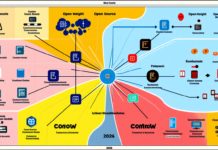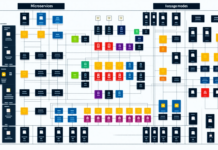
Summary: Two autonomous artificial intelligence architectures have dominated the market since 2023: AutoGPT and BabyAGI. The former excels at multimodal generation and executing complex tasks, while the latter focuses on intelligent management and goal prioritization. To get started without missteps, you need to understand their fundamental differences, their real costs, and their operational limits before choosing the tool suited to your business context.
Brief: In 2026, autonomous agents are no longer just a technological curiosity: they are genuinely transforming workflows in software engineering, research, and business automation. Yet choosing between AutoGPT and BabyAGI remains a critical strategic decision. 🎯 AutoGPT offers maximum flexibility and multimodal capabilities, but can generate costs of €100 to €500 per day without strict supervision. 🤖 BabyAGI favors efficiency and intelligent task prioritization, ideal for structured workflows. 💡 The key to success: set an execution budget, monitor in real time, and select the agent based on your specific use case, not marketing hype.
🎯 Understanding Autonomous Agents: The Silent Revolution of Unsupervised AI
Contents
An autonomous agent is fundamentally different from a chatbot or a typical AI assistant. While a traditional tool waits for your instructions at every step, an autonomous agent operates in a continuous iterative cycle: it defines its own sub-goals, creates its task list, executes them in parallel or sequentially, then self-evaluates before adjusting its strategy. 🔄 This ongoing feedback loop turns a process that would have required hours of supervision into near-complete automation.
This distinction from traditional systems is crucial for understanding the potential pitfalls. A traditional agent returns a result after a few seconds; an autonomous agent can stay active for hours, generating hundreds of calls to language models, burning through budget, and sometimes drifting away from its original goal. 💸 This paradigm explains why autonomous agents excel at certain tasks (multi-source research, code exploration, content generation) but remain dangerous for others (financial transactions, modifications to critical databases).
Since their emergence in 2023, these systems have evolved rapidly. Early versions were fragile, prone to infinite loops and amplified hallucinations. By 2026, frameworks have stabilized and companies have developed robust safeguards. 🛡️ Still, the myth persists that you can “launch an agent and forget about it.” Reality demands vigilance, limited budgets, and human validation.

⚙️ AutoGPT: The General-Purpose Architecture for Complex, Multimodal Tasks
AutoGPT, launched in March 2023 by Significant Gravitas, quickly established itself as the benchmark for general-purpose autonomous agents. 🏆 Built on GPT-4 or GPT-3.5, it embodies a simple yet powerful philosophy: letting an AI give itself its own instructions, execute them, and then validate its progress toward a goal. Unlike BabyAGI, which focuses on task management, AutoGPT takes a more holistic approach.
AutoGPT's architecture rests on five essential components. First, an initial planner that breaks your goal down into sequential sub-tasks. Next, an execution loop that takes each task, runs it through the LLM, then records the result. Third, a self-evaluation mechanism: after each task, the agent checks whether it is progressing toward the goal. Fourth, dynamic task creation: if the agent determines that new challenges have emerged, it generates new tasks. Finally, a memory system that retains the context of previous tasks to avoid redundancy.
What sets AutoGPT apart is its ability to handle multiple input modalities. 🖼️ It can analyze images, text, and structured data, and even browse the web or access local files through plugins. For a software engineer who has experienced the challenges of autonomous agent systems, this versatility is a major asset: a single agent can simultaneously analyze a screenshot of a bug, search for solutions online, generate a code fix, and document the change.
AutoGPT's visual interface is also a crucial differentiator. 🎨 Unlike BabyAGI, which requires working with code or JSON configurations, AutoGPT offers a drag-and-drop builder accessible even to non-developers. A product manager can create an agent to analyze customer reviews without writing a single line of code.
That flexibility comes at a price, however. AutoGPT agents quickly burn through API budget, since each iteration triggers multiple calls to the model: one to generate the plan, one to execute, one to evaluate, and potentially more for corrections. On a complex task spanning 100 iterations, this can easily reach €20 to €50. ⚠️ Moreover, without rigorous safeguards, AutoGPT is prone to “goal drift”: the agent starts out looking for restaurants in Paris but ends up analyzing the history of 18th-century French cuisine.
🔧 Use Cases Where AutoGPT Excels
AutoGPT really shines for automated research and monitoring. Imagine a marketing agency that needs to track generative AI news and compile a weekly report with trends, thought-leader quotes, and competitive analysis. An AutoGPT agent can run every Monday, scan 50 sources, extract the relevant information, and generate a formatted document—all without human intervention, for an estimated cost of €8 to €15 per run.
Multi-step content generation is another area where AutoGPT proves its value. 📝 Creating a complete article requires: sourcing research, structuring an outline, writing section by section, adding citations, proofreading, and SEO optimization. Handing this chain over to an AutoGPT agent lets it learn from your feedback and refine its quality over successive iterations.
Code exploration and documentation is a third powerful example. Developers often face unfamiliar repositories and need to understand their architecture, identify patterns, and document critical points. An AutoGPT agent can clone the repo, analyze its structure, generate an architecture diagram, and write the documentation without supervision.
🧠 BabyAGI: The Expert in Task Management and Intelligent Prioritization
BabyAGI, created by Yohei Nakajima in April 2023, represents a different philosophy: rather than aiming for generality, it optimizes the collective intelligence of tasks. 🎯 Where AutoGPT says “execute these 50 tasks in order,” BabyAGI says “understand that there are 50 tasks, prioritize them intelligently, create new tasks if needed, and execute them according to a dynamically updated order of importance.”
BabyAGI's architecture revolves around four main steps. First, the agent receives an overall goal (for example: “plan a 3-day trip to Berlin”). Second, it automatically generates a task queue: searching for flights, comparing hotels, finding attractions, and so on. Third, it constantly reprioritizes: instead of executing tasks in the order they were created, it reassesses their importance based on previous results. For instance, if the flight search reveals that prices rise on Thursday, it will prioritize booking for Wednesday. Fourth, it dynamically updates its list: after each completed task, it decides whether new tasks have emerged.
This approach relies on a vector-based architecture and embeddings. 🔢 Each task is converted into a numerical vector so it can be compared to others, enabling similarity and relevance calculations. BabyAGI typically uses a vector database (Pinecone, Weaviate) to store and retrieve the relevant tasks based on the current context.
According to a detailed comparison of the two agents, BabyAGI excels when the order of execution depends heavily on previous results. A BabyAGI agent will organize a construction project by realizing that permits must be obtained before materials are ordered, whereas an AutoGPT agent might generate a fixed, less optimal order.
However, BabyAGI comes with constraints. It's an open-source project with far less graphical user interface than AutoGPT; users often have to work with Python code or YAML configuration files. 💻 Furthermore, while BabyAGI is powerful for workflow optimization, it is less suited to multimodal tasks or those requiring creative exploration (writing innovative articles, AI-assisted graphic design).
🎬 Scenarios Where BabyAGI Stands Out
BabyAGI excels at workflows with complex dependencies. 🔗 Think of a project manager running a distributed team: tasks cannot be executed in just any order. Coding a feature depends on the finalized spec; testing depends on finished code; deploying requires passing tests. BabyAGI understands these dependencies and automatically reorders tasks, rather than following a rigid sequence.
Managing complex projects with multiple iterations is another area. Creating a marketing plan for a campaign requires: defining the target audience, analyzing the competition, crafting the message, selecting channels, setting the budget, and adjusting each element based on new findings. BabyAGI continuously reexamines the list and realigns priorities, often producing better results than a linear approach.
Finally, personalized learning and adaptation systems benefit from BabyAGI. An educational platform using BabyAGI can dynamically create learning tasks tailored to each student, reorder them based on detected difficulties, and generate additional content to reinforce identified gaps.
⚡ Direct Comparison: Which Architecture for Which Use Case?
Placing AutoGPT and BabyAGI side by side reveals fundamental strategic differences. 🔍 AutoGPT works like a universal assistant capable of exploring anything; BabyAGI acts like a project manager optimizing the execution sequence. This distinction affects every selection decision.
Flexibility vs. Optimization. AutoGPT adapts to any goal; BabyAGI optimizes the achievement of a known goal. If you don't know exactly what will be needed, AutoGPT absorbs the uncertainty. If you know the tasks but don't know their optimal order, BabyAGI excels. 📊
Cost vs. Efficiency. AutoGPT can be more expensive because it generates more API calls while exploring different paths. BabyAGI, being more targeted, often consumes fewer tokens, but that savings assumes you've properly defined the initial goal. 💰
Ease of access. AutoGPT offers a visual interface; BabyAGI requires a certain level of technical comfort. For a beginner without a developer background, AutoGPT will be more accessible. For a software engineer, BabyAGI offers more control.
According to a detailed comparative analysis, the real question isn't “which one is better,” but “which one matches your main constraint?” If you're optimizing for setup time, choose AutoGPT. If you're optimizing for cost or prioritization quality, choose BabyAGI.
📈 Realistic Cost Models and Budget Comparison
Understanding the operational costs of each agent is critical for sustainable deployments. 💸 With GPT-4, each call costs roughly €0.03 per 1,000 input tokens and €0.06 per 1,000 output tokens. An average task generates 2,000 tokens. An agent running 50 iterations generates 150 LLM calls, consuming roughly €15.
AutoGPT, which often generates 3-4 calls per iteration (initial plan, execution, evaluation, adjustments), results in higher multiples. An in-depth research task spanning 200 iterations can consume €60 to €120. BabyAGI, being more direct in its workflow, generally stays below that for equivalent tasks. 🤔
That said, a common mistake is assuming AutoGPT is “too expensive.” Weigh that cost against the value delivered: if the agent produces a monitoring report that would have taken an employee 8 hours (cost: €200 plus processing time), the €20 in API spend represents a substantial net savings. ✅
🚀 Deployment and Integration: Beyond the Theoretical Comparison
Choosing an agent also means choosing its ecosystem. 🛠️ AutoGPT offers native integrations with REST APIs, OAuth, and several popular frameworks. BabyAGI, being lighter weight, often requires custom development to integrate with your existing systems. This difference becomes more pronounced as your infrastructure grows.
For a team using modern tools (Slack, Zapier, Make.com), AutoGPT offers direct connectors. An AutoGPT agent can send a Slack message summarizing its findings directly. BabyAGI requires an intermediary (webhook, linking script) to achieve the same result. 🔌
That said, when it comes to depth of control, BabyAGI tips the scale for advanced users. You can customize the prioritization system, add specific business rules, and fine-tune the algorithm for your particular context. AutoGPT leaves more to the model itself, offering less leverage for fine-grained optimization.
To get started without making a mistake, check out our complete guide on autonomous agents and automation, which details the implementation paths for each agent based on your technical profile.
🛡️ Security, Control, and Governance
An autonomous agent released into your infrastructure without safeguards can become dangerous. ⚠️ An agent without limits can delete important files, generate hundreds of messages on your channels, or trigger an infinite loop of paid API calls.
AutoGPT offers strict limitation mechanisms: iteration budgets, timeouts, whitelists of allowed actions. You can say “this agent can read files but not write them” or “it can only call these three APIs.” BabyAGI, being more basic, often requires a custom security wrapper around the Python code.
Traceability also plays a crucial role. AutoGPT generally logs its steps in a structured way: task, execution, result, decision. That's valuable for a later audit or for debugging. BabyAGI, less oriented toward formal logs, requires you to add that logging yourself. 📋
In a regulated context (FinTech, HealthTech, sensitive data), AutoGPT proves more credible to auditors. BabyAGI requires you to validate its security on a custom basis.
💡 Common Mistakes and Pitfalls to Avoid During Deployment
Between marketing promises and operational reality, beginners often fall into the same traps. 🚨 The first: assuming an autonomous agent works “on autopilot.” Not true. Every agent requires close supervision during its first runs, with limited test budgets and manual evaluation of the results.
The second pitfall: goal drift. An agent that set out to find the “best restaurants in Paris” can end up analyzing 18th-century culinary history or Michelin review trends. ❌ This happens because the agent continually reframes the task based on what it discovers, gradually drifting away from the original intent.
The third pitfall: silent infinite loops. An agent can get stuck in a loop where it generates a task, executes it, then generates the same task again, indefinitely. You discover the problem an hour later, with €100 in accumulated charges. The antidote: always implement pattern detection and a strict iteration limit.
The fourth pitfall: the illusion of controlled hallucination. LLMs hallucinate (they invent data). An agent that hallucinates is worse than a human who does, because it propagates the error with every iteration. ⚠️ If the agent “discovers” that Bitcoin is priced at €100,000 (false), then uses that figure for five subsequent analyses, the error compounds. Always validate the data output by the agent against reliable external sources.
The fifth pitfall: neglecting security safeguards. An agent without granular permissions can accidentally delete a database or send thousands of API requests. Even for seemingly harmless monitoring tasks, impose strict limits on what the agent is allowed to do. 🔒
✅ Secure Deployment Checklist
Before launching an agent into production, check off every item. 📝 Is a maximum budget set and approved? Is an iteration limit defined? Is a machine timeout scheduled? Is full logging enabled? Is loop detection implemented? Has the first run been manually validated? Is each piece of output data reliable? If any answer is no, go back to the configuration.
For critical tasks (database modifications, financial transactions), add explicit human approval before every major action. An agent can propose, but the human decides. 👤 This “human-in-the-loop” approach remains the most reliable for high-sensitivity contexts.
🎓 Learning and Practicing: Resources to Help You Progress
The best way to understand autonomous agents remains hands-on practice. 🔨 Rather than just reading articles, build a test agent for your own context. If you're a marketing manager, create an agent to analyze competitor reviews. If you're a developer, create an agent to document legacy code.
Fundamental resources include the official GitHub repositories (AutoGPT and BabyAGI both publish their code), as well as hands-on tutorials. The French-language DataCamp guide offers an excellent, well-structured introduction, covering both theory and hands-on exercises.
Start small. 🌱 Launch an agent on a bounded task (researching 5 articles, generating a list of 10 ideas) with a maximum budget of €5. Observe its behavior, note its strengths and weaknesses. Then iterate: add more precise instructions, refine the safeguards, and gradually increase complexity.
Join the communities built around these tools. The r/AutoGPT subreddit and GitHub discussions bring together users sharing their strategies, mistakes, and successes. You'll avoid the 10 most common mistakes simply by reading about what others have gone through. 💬
🔬 Experimenting with Variants
Once you're comfortable with AutoGPT or BabyAGI, explore hybrid solutions. CrewAI, for example, combines AutoGPT's general-purpose orchestration with BabyAGI's role-based system. LangGraph, built on LangChain, offers ultra-fine-grained control over the architecture. Microsoft's AutoGen introduces multi-agent cooperation, where several agents collaborate to solve a problem.
These emerging alternatives address certain limitations. According to our article on agents in software development, several companies that got started with AutoGPT are gradually migrating to more specialized solutions once their needs become clearer.
Don't lock yourself into a single tool. The autonomous agent ecosystem is evolving rapidly. What counts as “best practice” in 2026 may well be obsolete by 2027. Stay curious, experiment regularly, and adapt your stack based on what you learn. 🚀
Author Profile
Latest entries
 General27 November 2026Telethon: How Content Creators Are Reinventing Fundraising
 Food & Drink21 November 2026Beaujolais Nouveau: A Historically Low Harvest, Yet Sales Keep Climbing
 Finance20 November 2026Consumer Credit: Mini-Loans, Split Payments, and Overdrafts Face Tighter Rules
 Planet15 November 2026CO2 Emissions: Why Transportation Remains France's Climate Blind Spot
This article was written with the help of artificial intelligence. Editorial policy