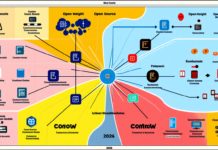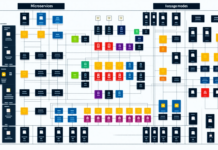
Summary: Integrating Microsoft AutoGen into a complex enterprise infrastructure requires a well-thought-out strategy. This open source framework, created by Microsoft Research, allows organizations to move from a single-agent logic to a truly collaborative multi-agent orchestration. Beyond the marketing promises, this guide explores how to deploy AutoGen realistically, taking into account the interoperability, IT security, and scalability constraints that IT teams face in 2026.
Key takeaways:
- 🤖 AutoGen represents a strategic shift: orchestrating teams of specialized AI agents rather than handing all tasks to a single agent
- 🏗️ The layered architecture (Core, AgentChat, Extensions) offers progressive flexibility, from rapid prototyping to advanced customization
- 🔌 Technology integration within a Microsoft ecosystem (Azure, Microsoft 365) creates synergies that simplify deployment
- ⚙️ Project management changes radically: agents collaborate through dialogue, not through rigid sequential instructions
- 🔐 IT security and interoperability remain critical challenges, requiring careful planning
- 📊 Scalability is achievable, but it requires thinking in terms of distributed, event-driven architecture
- 💰 The cost of multi-agent deployment can be controlled by starting with AgentChat before moving to more complex layers
🎯 Why Traditional Deployment Strategies Fail with Multi-Agent Systems
Contents
For years, companies have built their AI solutions around a simple paradigm: one assistant, one model, one task. ChatGPT arrives, you ask it to draft a report. A chatbot is deployed, it answers user questions. This approach has its merits, but it quickly hits its limits when business problems become more complex.
Imagine a finance team that needs to analyze quarterly data, generate visualizations, write an executive report, and email the conclusions to stakeholders. A standalone AI can technically do all of this, but it does so in a linear fashion, without feedback loops, without error correction, and without smooth human interaction. The result: mechanically generated reports, often inaccurate, with no real value.
Traditional deployment strategies try to tame unpredictability by imposing rigid workflows. Steps, dependencies, and validations are configured. But generative AI doesn't work like a factory with well-defined tasks. It works through exploration, iteration, and dialogue. AI agent deployment mistakes often come from this attempt to force a deterministic structure onto inherently adaptive systems.
This is where AutoGen changes the game. By putting dialogue at the center of its architecture, it allows agents to correct each other, ask questions, and adjust their approach in real time. The shift from rigid execution to organic collaboration is not just a technical refinement; it's a paradigm shift that redefines how we think about automation in 2026.
📋 AutoGen Architecture: Thinking in Layers for Progressive Deployment
Microsoft AutoGen is not a monolithic tool that you simply switch on and it “works.” It is a platform architected in three distinct layers, each addressing a different level of sophistication. Understanding this structure is essential for establishing a realistic and scalable deployment strategy.
🔨 The Core Layer: The Immutable Foundation
At the heart of AutoGen lies an asynchronous, event-driven messaging infrastructure, based on the actor model borrowed from distributed systems. Each agent is an autonomous actor that manages its own state and communicates exclusively through messages. In practice, this means there's no panic about synchronization if one agent takes longer than another to respond.
This layer is not meant to be manipulated by the average developer. It exists to ensure that interactions between agents are reliable, traceable, and reproducible. It's the electricity that powers the house; you don't ask the homeowner to rewire the panel themselves. That said, knowing it exists and provides this robustness is reassuring when considering a production deployment.
🏠 The AgentChat Layer: Where 95% of the Work Happens
AgentChat is the high-level interface that most developers will use. It provides ready-to-use predefined agents: AssistantAgent (the generative AI engine), UserProxyAgent (the human interface), WebSurferAgent (for browsing the internet), and other specialized agents depending on your needs.
Here, you define roles, configure instructions (system prompts), and orchestrate conversations between multiple agents. There's no need to go down into the Core layer. A developer with a solid understanding of Python and the OpenAI/Azure APIs can build powerful, production-ready systems while staying at this level. Checking out comprehensive resources on AutoGen provides a good foundation to get started.
Consider a concrete example: a consulting firm wants to automate the generation of client diagnostic reports. One agent collects data from a CRM database, another validates it, a third writes the report in natural language, and a fourth proposes optimization recommendations. All of this happens via AgentChat, without touching a single line of Core code.
🔌 The Extensions Layer: Connecting Your Existing Stack
Extensions allow you to link AutoGen to your existing tools and services. Have a Pinecone vector database? A Stripe payment API? An Azure Data Factory data pipeline? Extensions make these connections easy without reinventing the wheel.
This layer is critical for interoperability in a complex ecosystem. It ensures that AutoGen doesn't remain isolated but integrates naturally into the enterprise infrastructure already in place. For IT managers, that's excellent news: you don't need to replace everything to benefit from AutoGen.

🌐 Integration into the Microsoft Ecosystem: Synergies and Dependencies
Why did Microsoft create AutoGen? Not just to offer an altruistic open source framework. The real value emerges when you deploy AutoGen within the Microsoft ecosystem: Azure, Microsoft 365, Copilot, and all the services that revolve around them.
☁️ Azure as the Infrastructure Foundation
Azure provides the underlying infrastructure where your agents will live. Azure cognitive services (Computer Vision, Language, Search) become natural extensions for your agents. Your sensitive data stays within secure Azure services. Your LLM models (whether from OpenAI via Azure OpenAI Service or Microsoft Phi) benefit from Azure's compliance and governance.
For a banking or pharmaceutical organization, this integration drastically reduces compliance risks. Data stays within known boundaries, access is audited, encryption is applied by default. Traditional IT infrastructure and AI agents coexist harmoniously, rather than fighting each other.
📧 Microsoft 365 and Native Workflows
Imagine an agent that monitors your Outlook emails, extracts customer orders, and then automatically communicates them to another agent that updates Dynamics 365. Or an agent that generates PowerPoint slides from a data analysis report stored in SharePoint. With AutoGen integrated into Microsoft 365, these scenarios aren't tech enthusiast daydreams; they're operational realities.
This technology integration saves an enormous amount of connection engineering time. Microsoft 365 APIs are native, documented, and secure. You're not cobbling together fragile webhooks or shaky integrations with external tools.
🤝 Copilot and AutoGen: Complementary Rather Than Competing
Copilot Studio, Microsoft's low-code tool for building assistants, doesn't disappear in the face of AutoGen. On the contrary, they fill complementary roles. Copilot Studio excels at simple conversational interfaces, customer chatbots, and documented assistants. AutoGen shines when you need multi-agent collaboration, complex iteration, and sophisticated orchestration.
A mature strategy is to use Copilot Studio to expose your AutoGen agents through polished conversational interfaces, while keeping the complex business logic inside AutoGen. You get the best of both worlds: AutoGen's flexibility and Copilot's interface design.
🔐 Security, Governance, and Auditing in a Multi-Agent Deployment
As soon as you release several autonomous agents into your infrastructure, IT security becomes exponentially more complicated. Each agent can potentially access resources, modify data, and communicate with third parties. Without rigorous governance, you open up formidable attack vectors.
🔑 Granular Authentication and Authorization
Each agent should only access the resources necessary to accomplish its task. An agent that collects customer data should never have permission to delete user accounts. This is the principle of least privilege, well known in IT security but crucial to apply with AutoGen.
Azure offers managed identity and role-based access control (RBAC) capabilities that work well with AutoGen. Each agent gets an Azure AD identity, granular permissions, and a traceable audit of all its actions. This means that when an incident occurs (and it will), you can trace exactly what each agent did and when.
📊 Observability and Dialogue Traceability
Unlike a deterministic system where every instruction is planned, dialogues between agents can be unpredictable. An agent may ask questions, propose alternatives, or request clarifications. Every interaction must be logged, indexed, and auditable.
AutoGen natively includes structured logging. Every message, every decision, every result is recorded. For regulated industries (finance, healthcare, defense), this traceability isn't optional; it's a prerequisite.
🚨 Anomaly Detection and Incident Response
What happens if an agent starts doing strange things? Security auditing for autonomous agents becomes essential. You need to set thresholds: if an agent uses more than X tokens, accesses sensitive data unusually, or generates aberrant results, a circuit breaker triggers and the incident is escalated.
This constant monitoring isn't paranoid; it's pragmatic. LLM models, even the best ones, can hallucinate or be manipulated. With critical stakes on the line (financial transactions, medical diagnoses, legal decisions), vigilance is mandatory.
🚀 Scalability and Distributed Architecture: Moving from POC to Production
Deploying a proof of concept with two agents on a local machine is one thing. Deploying a system that orchestrates 50 agents across multiple teams, handling millions of requests per month, is another. AutoGen's scalability relies on its ability to function as a genuine distributed system.
📡 Event-Driven Architecture for Distribution
The Core layer of AutoGen v0.4 is architected around an actor model and asynchronous messaging. This means you can deploy your agents across multiple servers, or even multiple Azure regions, without disrupting the dialogue logic. A message published by an agent in Amsterdam can be received and processed by an agent in Singapore, seamlessly.
For global companies with low-latency or geographic redundancy requirements, this is a huge asset. You're not programming for a single machine; you're programming for a distributed system.
⚡ Load Balancing and Resource Management
When multiple users trigger multi-agent conversations at the same time, compute resources can become a bottleneck. AutoGen works well with orchestrators like Kubernetes, where you can dynamically scale agent pods based on demand.
OpenAI and Azure OpenAI Service APIs also offer throttling and quotas. These must be factored into your architecture to avoid unexpected overloads. Project management that is aware of these constraints from the design phase prevents unpleasant surprises in production.
💾 State Management and Data Consistency
When your agents are distributed, where does the shared data live? The conversations? The intermediate results? You need a persistence layer: databases, distributed caches, message queues. Modern multi-agent software architectures use patterns like CQRS (Command Query Responsibility Segregation) or event sourcing to ensure consistency.
AutoGen doesn't impose these patterns, but it tolerates them well. You can build a resilient architecture where each agent acts autonomously, but where the global state remains consistent through immutable events stored in an event store.
💡 Realistic Integration Strategies: From AgentChat to Production
Not all AutoGen deployments start at the same level of complexity. A good progressive strategy minimizes risk and ensures your organization builds skills at the same time it builds the solution.
Phase 1️⃣: Rapid Prototype with AgentChat (Weeks 1-4)
Start simple. Take a real business problem (not too complex, but concrete), and build a prototype with two or three agents using only AgentChat. The goal: prove that multi-agent collaboration brings real value to your specific use case.
One example: a junior agent that drafts a marketing email, a senior agent that reviews it and suggests improvements, and a human (via UserProxyAgent) who validates the final result. Three weeks, and you have proof that AutoGen works for your business.
Phase 2️⃣: Integration with Existing Systems (Weeks 5-12)
Once the prototype is validated, the real complexity emerges: integrating your agents with your existing infrastructure. Interoperability becomes the priority. Connect your agents to your CRM, your data warehouse, your payment system. This is where you use AutoGen Extensions and make sure all authentication, throttling, and auditing are in place.
This phase often reveals obstacles invisible at the prototype stage. Legacy APIs don't have the permissions you expected. Data formats don't match. Data pipelines are slower than hoped. Better to discover this now than in production.
Phase 3️⃣: Hardening and Going to Production (Week 13+)
Before putting a multi-agent system into production, certain elements must be consolidated. IT security must validate access and audits. Infrastructure must be ready for scalability. Operators must be trained to monitor and restart agents in case of failure. The cost of multi-agent deployment becomes more transparent once you have these pieces in place.
Many organizations stop at phase 2, settling for a semi-productive prototype that solves a problem without being truly robust. Phase 3 requires discipline and resources. But it's what separates a fun pilot project from a reliable enterprise solution.
🎯 Comparing AutoGen, CrewAI, and LangGraph: Choosing the Right Tool for Your Ecosystem
AutoGen doesn't exist in a vacuum. CrewAI, LangGraph, and other frameworks also offer multi-agent orchestration. How do you decide? The answer largely depends on your context and priorities.
🔄 AutoGen: Dialogic Orchestration and Collaboration
AutoGen excels when agents need to collaborate in a fluid, interactive, almost conversational way. Dialogues between agents don't follow a predefined linear plan; they emerge, adapt, and iterate. This is natural for creative tasks, debugging, brainstorming, or progressive learning.
One example: a researcher agent that proposes solutions, a critic agent that challenges them, and an arbiter agent that decides whether to validate or start over. The dialogue between the three wasn't predetermined; it builds itself as it goes.
📋 CrewAI: Automating Sequential Processes
CrewAI works best when your process has a clear step-by-step structure. Agent A retrieves data, agent B processes it, agent C generates a report. Each agent has a precise role, a well-defined task, and clear inputs/outputs.
This is ideal for data pipelines, AI-boosted RPA automations, or business workflows that already have an established structure. If you come from a world of IT process orchestration (Zapier workflows, Power Automate, etc.), CrewAI will feel natural.
🔀 LangGraph: Granular Control and Complex Workflows
LangGraph (from LangChain) offers the finest control at the level of each node and transition. You explicitly define workflow states, transition conditions, error handling, and loops. It's powerful, but also more verbose and cognitively demanding.
Use LangGraph if you have highly customized workflows, with many conditional branches, or if you need to integrate sophisticated custom code at every step. You get more control, but also more code to write and maintain.
🎲 Which Combination for Your Ecosystem?
Some organizations use several frameworks in tandem. A simple data pipeline? CrewAI. A collaborative debugging task? AutoGen. A highly customized workflow with complex business logic? LangGraph. Interoperability between these frameworks is improving; the ecosystem's tool interoperability documentation helps clarify these choices.
For an organization already invested in the Microsoft ecosystem, AutoGen offers the advantage of being a Microsoft product, well integrated with Azure and Microsoft 365. For organizations seeking maximum flexibility without dependence on Microsoft, CrewAI or LangGraph can be more neutral choices.
🔮 Common Mistakes and Lessons Learned in the Field
As an engineer who has led several AI agent production deployments, certain pitfalls come up again and again. Recognizing them ahead of time can save you months of frustration.
❌ Mistake 1: Underestimating the Complexity of Orchestration
Many people believe that because AutoGen handles dialogues, orchestration is “free.” Wrong. As soon as you have more than two agents, the possible dialogue permutations explode combinatorially. You need to think about: when to stop a conversation? How to avoid infinite loops? What happens if two agents disagree? These questions require thoughtful design and rigorous testing.
❌ Mistake 2: Ignoring Token Costs
Every interaction with an LLM has a token cost. With AutoGen, each agent can potentially generate multiple rounds of dialogue for a single user problem. API bills quickly explode. You need to monitor usage, set up quotas, and optimize prompts to reduce unnecessary tokens.
A simple multi-agent conversation that would have cost 100 tokens with a single agent can cost 500 with four agents discussing it. You need to plan for this load from the budgeting phase.
❌ Mistake 3: Ignoring Hallucinations in Dialogues
LLM models can hallucinate individually. When you have them talk to each other, hallucinations can amplify or correct each other. You can't assume that because an agent “said” something, it's correct. You need validation mechanisms, external sources of truth, and guardrails.
Collaboration is not a guarantee of quality; it's just a pattern that statistically improves the odds of better results, if well designed.
❌ Mistake 4: Deploying Without Security or Governance
Autonomous agents naturally worry security and compliance teams. If you deploy a multi-agent system without their explicit buy-in, without audits, without access controls, you're creating a compliance time bomb. Involve these teams from day 1, before you even write code.
🎓 Organizational Readiness: Culture and Skills
The success of an AutoGen deployment doesn't depend only on technology. It also depends on your organization.
👥 Assembling the Right Team
You need developers comfortable with Python and LLM APIs. But you also need someone who thinks architecturally: how does this solution fit into existing systems? What are the friction points? And you need a business champion who continually explains to the rest of the organization why this matters.
Many projects fail not because the technology doesn't work, but because business stakeholders don't believe in the project or because the technical team isn't ready to maintain it. Building a cross-functional team from the start increases your chances.
📚 Training and Skill Development
AutoGen isn't like deploying a standard REST API, where many developers have a good intuition. The concepts of multi-agency, structured dialogue, and advanced system prompting require skill development. Plan time and resources for your team to learn. Microsoft's framework on integrating and managing AI agents provides a good starting point.
🔄 A Culture of Experimentation
Multi-agent systems are less predictable than traditional architectures. There's a degree of emergence, of healthy unpredictability. Your organization must accept that the first deployment won't be perfect, that you'll need to iterate, learn, and adjust.
A culture of blameless postmortems and continuous improvement becomes essential. When an agent does something unexpected, the question isn't “who's to blame?” but “what did we learn, and how do we improve the design?”
💼 Realistic Use Cases in Complex Ecosystems
To solidify your intuition, let's look at a few concrete scenarios where AutoGen makes a real difference in complex enterprise ecosystems.
🏦 Case 1: Customer Onboarding at a Bank
A customer walks into your bank. One agent collects their KYC (Know Your Customer) data. A second agent validates it against compliance databases. A third drafts the necessary documents. A fourth sets up the account. And a UserProxyAgent (an employee) can step in at any time to approve, question, or adjust.
Before AutoGen: a linear process, with a lot of manual back-and-forth, a 2-day turnaround. After AutoGen: smooth dialogues between agents, minimal human intervention, a few hours.
📊 Case 2: Data Analysis for a Retail Group
Every day, you have gigabytes of raw sales data. A data agent cleans it. An analyst agent generates statistics. A visualization agent creates charts. A writing agent drafts an executive report. An email agent sends it to directors.
Each agent can discuss with the others: “Last month's numbers don't match the forecasts; should I look for an anomaly?” If one of the layers detects a problem, it can restart the dialogue rather than propagate the error.
🛠️ Case 3: Automating Technical Support
A customer opens a ticket. An understanding agent parses the problem and collects contextual information. A diagnostic agent searches the knowledge base for a solution. A repair agent attempts a fix. A test agent validates that it worked. If an agent detects that a step didn't work, it flags it, and the dialogue restarts or escalates to a human.
Fewer unanswered tickets, faster resolutions, humans reserved for true escalations.
📈 Metrics and Governance: How to Measure Success
You've deployed AutoGen. How do you measure whether it's a success?
📊 Technical Metrics
⏱️ End-to-end latency: how long does a multi-agent conversation take, compared to the previous manual version?
💰 Cost per transaction: divide API expenses by the number of tasks completed.
🎯 Error rate: what percentage of dialogues result in a correct solution on the first try?
🔁 Number of iterations: does the dialogue converge quickly, or does it take many rounds?
💼 Business Metrics
👥 Workforce reduction: how many FTEs (full-time equivalents) can you redeploy to more strategic tasks?
📈 Increased capacity: are you handling more cases, faster, with the same team size?
😊 Customer satisfaction: are customers receiving better-suited responses, faster?
⚠️ Reduction in manual escalations: what percentage of tasks can you handle entirely automatically?
🔒 Governance Metrics
📋 Audit coverage: are 100% of interactions logged and traced?
🔐 Access compliance: does no agent access resources beyond its permissions?
🚨 Detected security incidents: does your system detect anomalies quickly?
🎬 AutoGen Studio: No-Code Prototyping, Limitations and Realities
Microsoft offers AutoGen Studio, a low-code interface for quickly prototyping agents without writing Python. It's tempting: assemble agents by drag-and-drop, test them immediately.
✅ Where AutoGen Studio Shines
For POCs, demos, and quick explorations, AutoGen Studio is excellent. A business analyst can prototype a workflow without waiting for a developer. You quickly test whether a multi-agent approach adds value for your use case.
⚠️ Where AutoGen Studio Hits Its Limits
But Studio isn't ready for production. It lacks granular control, optimized performance, and advanced observability. You can't deploy a complex Studio application on Kubernetes expecting it to scale to 1,000 requests per second.
The best approach: use Studio to explore and validate the idea, then move to Python/AgentChat to build a production-ready solution.
🌍 Multi-Cloud Interoperability and Independence from Microsoft
AutoGen is open source and compatible with several LLM providers: OpenAI, Azure OpenAI, HuggingFace, Anthropic Claude, etc. You're not locked into the Microsoft ecosystem, even though Azure synergies make it attractive.
🔀 Multi-Provider Strategies
Some organizations use Azure OpenAI in production and OpenAI directly in dev/test to reduce costs. Others maintain a base of internal models deployed on HuggingFace Transformers. AutoGen adapts to these different topologies. A comprehensive resource on building and managing AI agents with AutoGen explores these nuances.
☁️ Portability and Lock-In
If you write your business logic in pure Python AutoGen, without heavily relying on specific Microsoft extensions, your code remains relatively portable. You can migrate from Azure to AWS, or vice versa, without rewriting everything.
That said, the more you integrate Copilot, Microsoft 365, and Azure AD identities, the more the Microsoft ecosystem becomes your foundation. Being conscious of this trade-off from the design stage is prudent: are you gaining short-term productivity at the risk of long-term dependency?
🔄 Iterative Cycles and Continuous Agent Improvement
Unlike traditional software applications, where you ship a v1.0 and wait 6 months before v2.0, multi-agent systems improve continuously.
📝 Feedback Loops and A/B Testing
You can monitor dialogues, identify where agents diverge from expectations, adjust system prompts, and track improvement. Some systems work well with GPT-4, others with Haiku. You quickly test which configuration gives the best results for your specific use case.
🧠 Fine-Tuning and Specialization
In the long run, rather than using generic models, you can fine-tune specialized models for your business domains. A model trained on your corpus of legal contracts will be much better for legal agents. AutoGen integrates naturally into these continuous improvement workflows.
💰 Calculating ROI: Beyond Marketing Promises
AI projects easily get “innovation” budget. But let's stay grounded: what are the real ROI gains of an AutoGen deployment?
💵 Direct Gains (Quantifiable)
🕐 Reduced operational time: If a task that used to take 4 hours manually now takes 1 hour (agent + human review), and you have 100 of these tasks per month, that's 300 hours saved monthly, or 3-4 FTEs.
📊 Increased capacity without a proportional increase in costs: You handle 2x more customers without hiring 2x more people.
⚡ Reduced human errors: Agents are more consistent. Fewer errors means less rework.
💭 Indirect Gains (Less Quantifiable but Real)
🎯 Improved business quality: Results are more complete, more nuanced, because multiple agents collaborate.
🧠 Increased cognitive capacity: Your human teams focus on strategy, not repetitive execution.
🚀 Competitive positioning: You offer faster, more personalized services than competitors who still do everything manually.
📉 Real Costs to Anticipate
💻 Cloud infrastructure (Azure): approximately $500-2,000 per month depending on load.
🔌 LLM API calls: depends on load, but typically $1,000-5,000 per month for a moderately used application.
👨💼 Maintenance and improvement team: at least one senior developer on an ongoing basis.
🔐 Compliance, auditing, security: initial costs of $10,000-20,000 for a first robust setup.
For a solid ROI, you needed annual operational gains of at least $200,000-300,000 to justify a serious deployment. Small POCs cost less, but also offer less value.
🎯 Realistic Starting Points for Your Organization
If you're an IT decision-maker or architect reading this, here's how to get started concretely:
🔍 Audit Your Business Processes
Identify tasks that are: repetitive, require collaboration (even virtual collaboration between systems), involve multi-perspective judgment, or are not fully deterministic. These tasks are the ideal candidates for AutoGen.
🏢 Conversation with the Business Team
Involve the actual end users. Ask them: “If we could automate 70% of this process, what would you do with your time?” Their answers give you the real ROI.
🧪 Limited Pilot Project
Choose a use case that isn't critical (to minimize risk) but important enough to make a real difference if successful. Two months, a small team, AgentChat only. No bells and whistles, just validate that multi-agent collaboration creates real value.
📚 Training and Infrastructure
Once the pilot is validated, invest in training your team and setting up a serious infrastructure (Azure, Kubernetes, centralized logging, security).
AutoGen is a mature, reliable technology. What remains difficult is organizational integration and change management. Accept that, and you have real chances of success.
Author Profile
Latest entries
 Food & Drink21 November 2026Beaujolais Nouveau: A Historically Low Harvest, Yet Sales Keep Climbing
 Finance20 November 2026Consumer Credit: Mini-Loans, Split Payments, and Overdrafts Face Tighter Rules
 Planet15 November 2026CO2 Emissions: Why Transportation Remains France's Climate Blind Spot
 Artificial Intelligence12 November 2026Imagine Enterprise: IBM and Microsoft Team Up on AI Agents for Large Businesses
This article was written with the help of artificial intelligence. Editorial policy