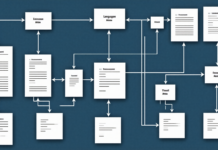
📊 In short: CrewAI and LangChain represent two radically different approaches to building autonomous artificial intelligence systems. LangChain favors flexibility and the integration of a multitude of models and tools, while CrewAI positions itself as an orchestrator of specialized agents capable of collaborating on complex tasks. The choice between these two frameworks depends directly on your project's architecture: opt for LangChain if you need broad adaptability and a progressive learning curve, prefer CrewAI if you're planning true multi-agent systems with task delegation and decision-making autonomy. Both tools dominate the market in 2026, but their use cases diverge significantly depending on the complexity of the business problem to be solved.
🎯 The fundamental architectural differences between CrewAI and LangChain
Contents
Understanding the divergence between CrewAI and LangChain starts with examining their respective architectural foundations. LangChain, launched in 2022, was built as a generic abstraction layer on top of language models, offering developers a battery of modular components to chain API calls together, manage memory, interact with vector databases, and orchestrate workflows.
CrewAI, on the other hand, emerged more recently with a radically different philosophy: rather than offering a stack of tools, it imposes a paradigm of autonomous agents, each with a role, explicit goals, and the ability to delegate subtasks to fellow agents. This conceptual distinction transforms the way you think about developing an AI application.
With LangChain, you build chains: prompt chains, information-retrieval chains, processing chains. The approach is sequential, and you retain granular control over every step. You decide when to move from one action to the next, which model to use, how to format the data. This granularity is a considerable strength for rapid prototypes or well-defined use cases, but it also requires careful management of control flow.
CrewAI flips this logic: you define agents with their respective missions, then let the framework orchestrate the interactions. An agent can decide to call on a colleague, look for additional information, or rephrase its response without explicit instruction from you. This autonomy introduces an extra layer of abstraction that simplifies solving complex multi-step problems.

💼 LangChain: the Swiss Army knife of AI development
LangChain has established itself as the reference framework for a simple reason: its functional coverage is exceptionally broad. Whether you need to build a RAG (Retrieval-Augmented Generation) system, manage a multi-turn conversation, interact with external APIs, or maintain a sophisticated memory context, LangChain provides the necessary abstractions.
The core of LangChain rests on modular components: LLMs (Language Models), chains (processing pipelines), retrievers (document search engines), and simple agents. By combining these building blocks, you can quickly assemble complex pipelines. Imagine a financial services company that wants to build a chatbot capable of reading client contracts, summarizing them, and answering specific questions about the contractual terms.
With LangChain, this architecture would be relatively straightforward: a loader to ingest the PDF documents, a splitter to break the text into manageable chunks, an embedding model to vectorize these chunks, a vector database to store them, then a retriever that pulls relevant documents based on a user's question. Finally, a final chain that combines the retrieved context with the language model to generate a response. You control every step, which lets you fine-tune the behavior.
This approach is a major asset for projects where predictability and debugging are critical. AI strategies with a critical mindset require exactly this kind of transparency in the decision-making process, which LangChain facilitates by exposing every step of the workflow.
However, this flexibility comes at a price: the learning curve. LangChain requires understanding not just AI concepts, but also the technical details of the processing chain, token management, embedding selection, and prompt optimization. For a team of three to five engineers working on an established product, this investment in understanding pays off quickly.
📈 Classic use cases for LangChain
The projects that benefit most from LangChain are those where granular control brings direct value. Take a personalized recommendation system based on user history: LangChain lets you precisely structure how past data is retrieved, contextualized, and passed to the model. A data analysis tool that needs to turn natural-language queries into sophisticated SQL queries also gains considerably from using LangChain, since each transformation can be tested and optimized independently.
Anomaly-detection or risk-analysis systems in healthcare or finance also benefit from this granularity: you can instrument and monitor every step, ensure regulatory compliance, and maintain complete audit trails. LangChain then becomes not just a development tool, but a foundation for AI governance.
🤖 CrewAI: multi-agent orchestration for complex tasks
CrewAI embodies a major conceptual shift: instead of thinking in terms of processing chains, think in terms of work teams. Each agent has a role (for example, “researcher”), a mission (for example, “find best practices in cloud security”), available tools (for example, a search engine, a documentation API), and a personality defined by its instructions.
When you launch a complex task in CrewAI, the framework doesn't execute a pre-set sequence, but coordinates genuine inter-agent collaboration. An agent may decide it needs to delegate a subtask to a better-qualified colleague, wait for the results, then integrate them into its final response. This dynamic introduces an adaptive flexibility that LangChain cannot replicate without extra, explicit code.
Imagine a fintech startup that needs to analyze regulatory compliance reports, identify risks, and propose mitigation strategies. With CrewAI, you could create three agents: a “compliance specialist” tasked with interpreting the regulations, a “risk analyst” responsible for assessing exposures, and a “business strategist” proposing solutions. Instead of predefining the exact flow, you let these agents organize themselves: the compliance specialist can ask the strategist to clarify a requirement, then pass that information on to the risk analyst.
This architecture better reflects the reality of human teams: the best results rarely emerge from the mechanical execution of steps, but from adaptive collaboration and cross-disciplinary expertise.
🎓 When CrewAI outperforms LangChain
CrewAI particularly excels in areas where complexity stems not from technical integration, but from distributed cognition. Research and development projects benefit enormously from this approach: one agent can explore different hypotheses in parallel, another can synthesize the results, while a third validates overall coherence. Highly specialized customer support systems, where different agents handle technical questions, complaints, and escalations, also find natural expression in CrewAI.
For use cases requiring iterative decision-making, CrewAI offers significant advantages. An agent can examine a situation, ask its colleagues questions, revise its assessment, and work toward a more robust decision. This aspect makes CrewAI particularly appealing for consulting applications, strategic planning, or complex diagnostics.
Check out Agentlink's resources to understand how the agentic approach is transforming system architectures and opening up new possibilities for distributed governance.
⚖️ Direct comparison: flexibility versus autonomy
The real trade-off between CrewAI and LangChain isn't about quality—both frameworks are excellent—but about your mental model of the problem. Would you rather explicitly orchestrate every interaction (LangChain) or delegate orchestration to autonomous agents (CrewAI)?
LangChain shines in contexts where the steps are well-defined and unlikely to diverge. An ETL (extract, transform, load) process enriched with AI, a text-processing pipeline, a scoring system—these applications benefit from LangChain's procedural clarity. You write the code once, deploy it with confidence, and know exactly what's happening at every point of execution.
CrewAI becomes more interesting as soon as you accept variability in the resolution path. Tasks involving discovery, adaptation, or cross-disciplinary expertise see their development accelerated with CrewAI. You spend less energy orchestrating the details and more time defining the agents' roles and goals.
In terms of ecosystem, LangChain has a significant lead: more third-party plugins, more educational resources, a more established community. CrewAI is catching up quickly, but the importance of this ecosystem cannot be ignored, particularly if your team is small.
🔧 Practical considerations for selecting a framework
The choice between these two frameworks depends on concrete factors: your team's size, developers' technical profile, tolerance for external dependencies, and the very nature of the business problem.
Team size and expertise: A team of one or two people with strong Python experience benefits from LangChain, since learning resources are abundant and the initial curve is less steep, even if longer overall. A larger team with AI specialists can explore CrewAI and take advantage of its multi-agent philosophy to parallelize development.
Project time horizon: For an MVP (minimum viable product) deliverable within two months, LangChain often wins out: you can quickly assemble a working solution. For a long-term product requiring continuous evolution and greater adaptability to new business challenges, CrewAI offers a more flexible foundation.
Integration with external tools: If your architecture depends on dense integration with third-party APIs, proprietary vector databases, or specialized LLMs, LangChain often proves more direct. CrewAI abstracts away these details, which simplifies things but can also limit exotic fine-tuning.
Also look at the free and open-source solutions available to assess the total cost of ownership. LangChain and CrewAI are both open source, but their cross-cutting dependencies and infrastructure requirements can differ significantly depending on your deployment.
📊 Practical decision metrics
Ask yourself these concrete questions: How many distinct tasks does your system need to handle? Beyond five or six, CrewAI's multi-agent approach starts to offer clear advantages. How predictable is your workflow? If it's linear and deterministic, LangChain will be more than enough. If it's branching and requires adaptation, CrewAI wins.
What's your API call budget? CrewAI, with its iterative and delegative approach, can generate more inter-agent calls and therefore a higher cost with LLM providers. LangChain, being more tightly controlled, can be more cost-efficient for standard cases. Check out the resources on the cost of deploying multi-agent systems to clarify this issue.
Do you need full transparency and auditing? LangChain exposes every step, making compliance and debugging easier. CrewAI, with its inter-agent interactions, makes auditing trickier but also offers more autonomous “black box” behavior—a desirable property in some cases, problematic in others (for example, healthcare, finance).
🚀 Implementation and migration strategies
A pragmatic approach is to start with LangChain for an MVP, then gradually migrate to CrewAI if complexity demands it. Many teams adopt a hybrid strategy: LangChain for straightforward processing chains (parsing, extraction, enrichment), CrewAI for higher-order cognitive tasks (analysis, recommendation, strategy).
The move from LangChain to CrewAI isn't drastic: you wrap your existing LangChain chains as tools available to your CrewAI agents. A “data analyst” agent can invoke a LangChain chain dedicated to data cleaning, while a “strategist” agent uses another chain to generate recommendations. This interoperability makes the transition smooth and reduces risk.
Watch how the industry evolves: the agreements between OpenAI, Microsoft, and Amazon are shaping the framework landscape and could influence your choice of underlying infrastructure. Frameworks that integrate well with the Microsoft Copilot or OpenAI Assistants ecosystem are gaining strategic relevance.
Document your architectural choices rigorously. If you go with LangChain, focus on documenting the chains and prompts. If you prefer CrewAI, document the agents' roles, their responsibilities, and the delegation protocols. This documentation becomes crucial as soon as the team grows or a transition becomes necessary.
🌟 Trends and future direction of AI frameworks
The market for AI orchestration frameworks is evolving rapidly. CrewAI is gaining maturity and recognition, while LangChain continues to consolidate its lead through the breadth of its ecosystem. Toward 2026, we're seeing convergence: the two frameworks are influencing each other, with LangChain integrating more multi-agent capabilities and CrewAI refining its handling of processing chains.
Serious organizations are now investing in a multi-framework strategy. They don't choose “LangChain OR CrewAI,” but rather “LangChain AND CrewAI depending on context.” This flexibility itself becomes a critical skill: knowing when to use which tool, and how to combine them without friction.
The emergence of autonomous AI agents—capable of persisting, learning, and acting on the world—is also redefining expectations. Multi-agent system architecture is becoming an engineering discipline in its own right, with its own patterns, best practices, and pitfalls.
Finally, the governance and ethics of these systems will grow in importance. Frameworks that facilitate traceability, decision validation, and alignment with organizational values will be preferred. LangChain is naturally positioned here thanks to its granularity; CrewAI will need to develop sophisticated tools to expose and audit agents' deliberations.
For decision-makers and architects, the time has come for informed experimentation. Launch prototypes with both, measure performance on your specific use cases, and build the stack that maximizes your productivity without compromising maintainability or compliance. The future of AI systems rests on choosing the right abstractions—and these two frameworks offer relevant ones, just for different worlds.
Author Profile
Latest entries
 Finance20 November 2026Consumer Credit: Mini-Loans, Split Payments, and Overdrafts Face Tighter Rules
 Planet15 November 2026CO2 Emissions: Why Transportation Remains France's Climate Blind Spot
 Artificial Intelligence12 November 2026Imagine Enterprise: IBM and Microsoft Team Up on AI Agents for Large Businesses
 Economy11 November 2026Livret A Rate: Understanding How It's Calculated and Its Limits
This article was written with the help of artificial intelligence. Editorial policy