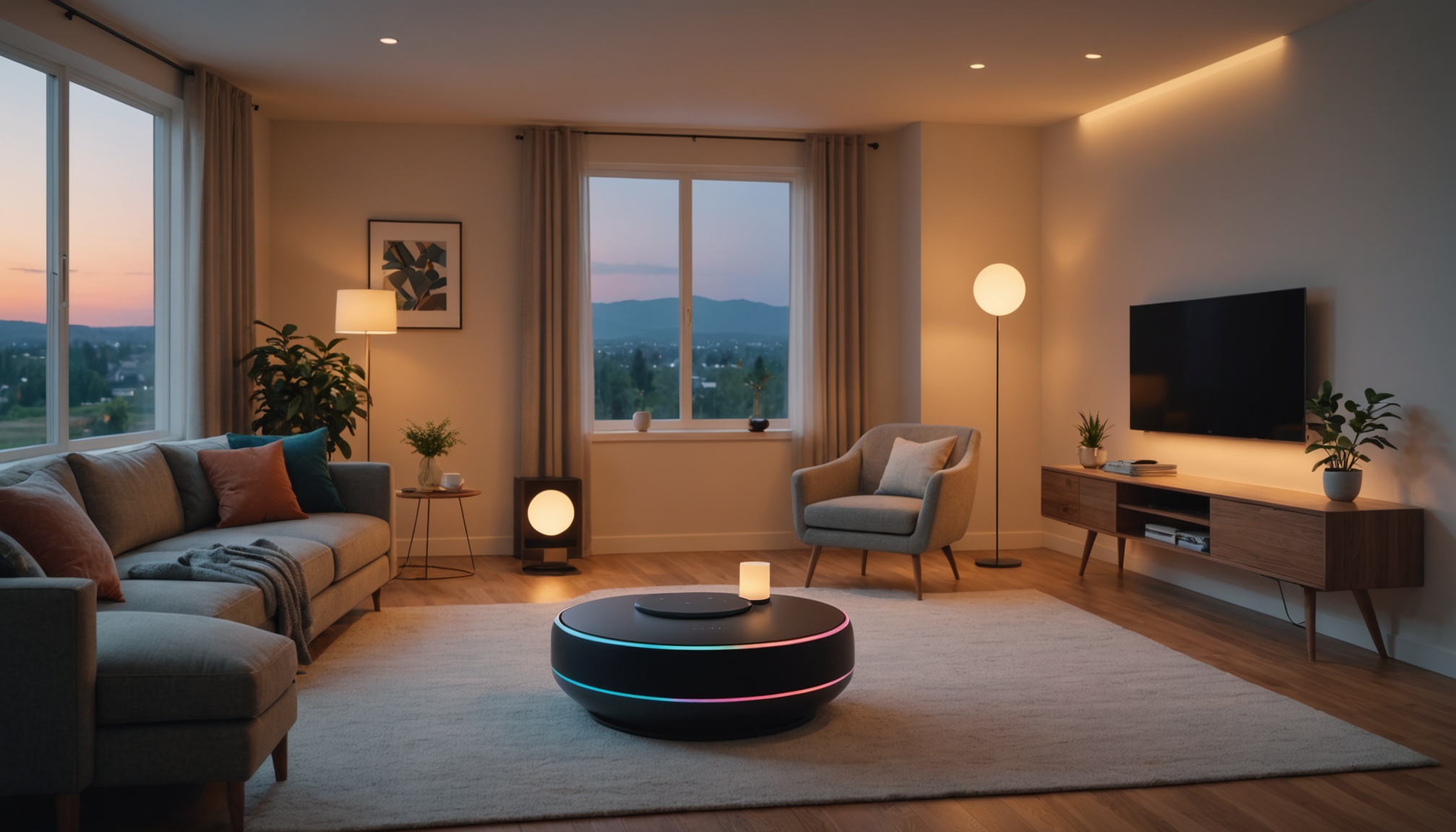
Between the CES in Las Vegas in January and the IFA in Berlin in September, 2026 marked a turning point for the connected home and artificial intelligence. Manufacturers are no longer just selling objects that obey voice commands: they're promising devices capable of observing, learning, and acting on their own, without anyone needing to ask them to do anything.
Sensors that understand space
Contents
At Aqara, the innovation is no longer limited to classic motion detection. The FP400 sensor, unveiled at CES 2026, uses millimeter-wave radar to track people's posture and position in a room, while the P100 sensor adds nine-axis detection to pick up vibrations, tilts, and impacts. The brand also unveiled a Hub W200 touchscreen thermostat compatible with Thread, Zigbee, and Matter, as well as a U400 lock that runs on Ultra Wideband. This development fits into a broader trend detailed in several concrete examples of autonomous agents applied to everyday tasks.
Appliances are learning to recognize what they hold
At the IFA 2026 in Berlin, several manufacturers showed devices capable of analyzing what they handle. Haier's Vision 15 washing machine has a built-in camera that observes the amount, colors, and fabrics of laundry to automatically adjust the cycle. The Horizon Hydro Hub and Maestro refrigerators, also from Haier, recognize the food stored inside them. At Hisense, the PureView refrigerator includes an AI companion that suggests recipes and flags expiration dates. LG, for its part, unveiled the ThinQ Claw agent, tasked with interpreting residents' requests and coordinating the home's various devices with one another.
- TP-Link showed off the Tapo T150 sensor, which uses radar to detect whether a room is occupied.
- Several brands, including Ugreen and Qualcomm, are betting on local data processing, without systematically sending data to the cloud.
- Energy management is becoming predictive, cross-referencing solar production, weather, and electricity rates.
Why this shift is happening now
This shift is driven by the spread of chips capable of running AI models directly on the device, without constantly relying on a remote server. It also responds to a growing concern for privacy: processing data at home rather than sending it to the cloud limits the risks in the event of a leak. This movement is part of a broader trend already seen with automated payments made by artificial intelligence during online purchases or personal AI agents capable of acting directly on the user's behalf: the home is becoming a new testing ground for these automated systems.
What to keep in mind before buying
Several of the devices shown at CES and IFA 2026 won't go on sale in France until 2027, and exact prices haven't always been announced. Before jumping in, it's worth checking compatibility with existing standards (Matter, Thread, Zigbee), where data is actually processed, and how long the manufacturer promises to provide software updates: a connected device without ongoing software support quickly becomes a weak point for home security.
Frequently Asked Questions
Are these new devices already available in France?
No, not all of them: several devices announced at CES and IFA 2026, including certain Haier and Hisense models, won't reach the market until 2027, according to the manufacturers.
What's the difference from traditional home automation?
Traditional home automation responds to commands or rules set in advance. The new devices aim to observe context (presence, posture, refrigerator contents) and automatically adjust their behavior without any intervention.
Does local data processing really protect privacy?
It reduces transfers to the cloud, which limits exposure in the event of a breach at a remote provider, but it's still essential to check each manufacturer's privacy policy before installing a connected device.
Sources
- Clubic — From home automation to spatial intelligence: how Aqara wants to make your home truly autonomous
- Technomedia — At the Berlin IFA, the connected home is getting smart
Author Profile
Latest entries
 Artificial Intelligence12 November 2026Imagine Enterprise: IBM and Microsoft Team Up on AI Agents for Large Businesses
 Economy11 November 2026Livret A Rate: Understanding How It's Calculated and Its Limits
 Shopping8 November 2026Black Friday: Key Dates and the Budget French Shoppers Are Planning
 Sports6 November 2026Men's Road Bike: How to Choose and Maintain One
This article was written with the help of artificial intelligence. Editorial policy