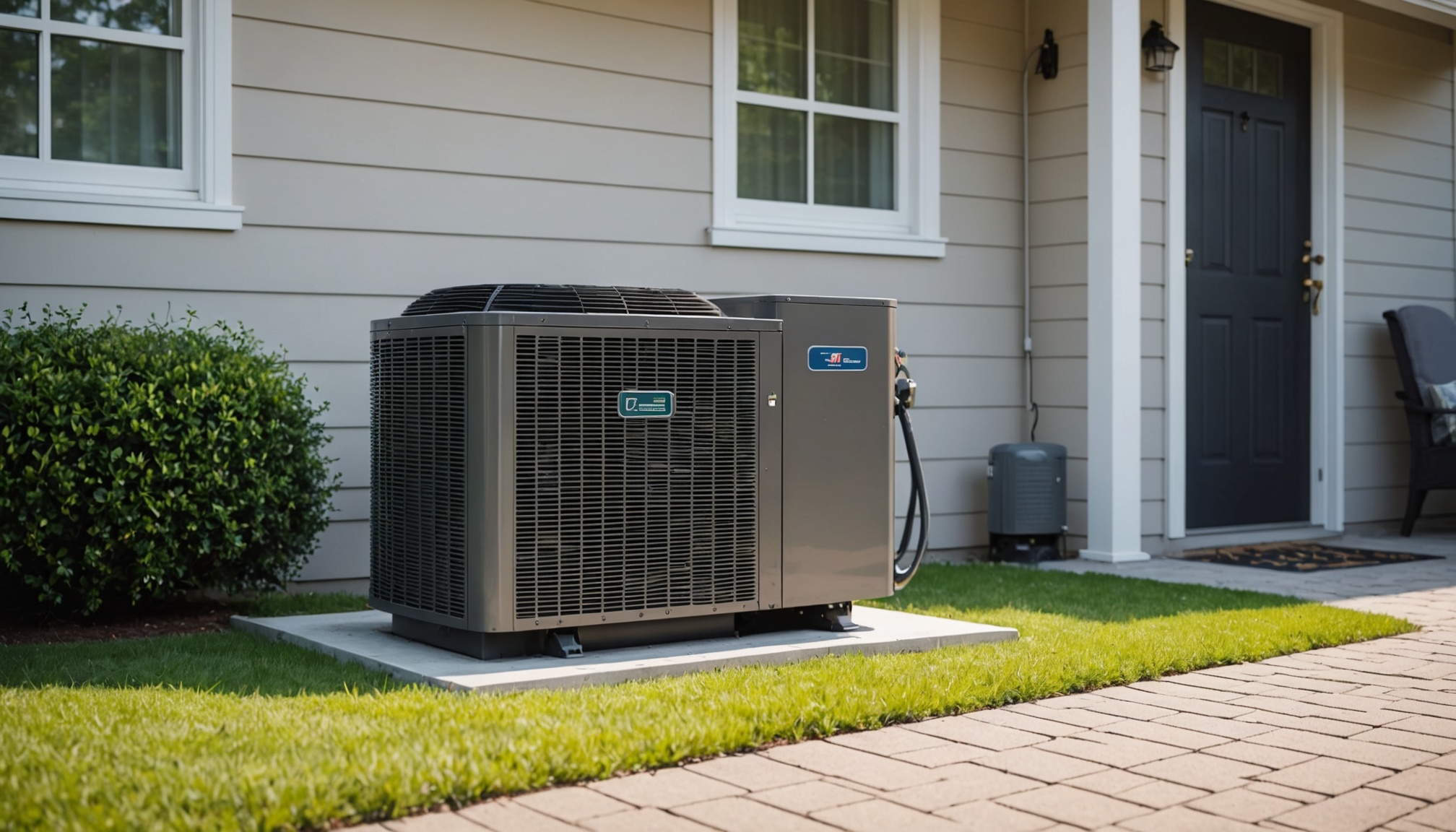
Installing a heat pump remains one of the most effective ways to cut a home's heating bill, but incorrect sizing can wipe out a good part of the promised savings. Before signing a quote, a few technical criteria deserve just as much attention as the price tag.
Getting the calculation right: floor area, insulation, climate zone
Contents
The power output needed is never just a matter of the home's floor area. As a rule of thumb, 1 kW for every 10 m² is used for a well-insulated house, but that ratio drops to 1 kW for every 6 or 7 m² in an older, uninsulated home, and rises to 1 kW for every 15 to 20 m² in a recently built one. Two 100 m² houses can therefore have heating needs that vary threefold depending on their level of insulation. Even before choosing a unit, it's often worth asking whether the smarter move isn't a broader energy renovation of the home, starting with insulation.
To compare the available models and get a first sense of the technical specs, a visit to the heat pump section at Lowe's (lowes.com) can help gauge rough ballpark figures before requesting a quote from an RGE-certified professional (RGE, the French state-recognized certification for energy-renovation contractors)—the only one authorized to produce the sizing report now required to keep access to government incentives.
COP: the figure you shouldn't overlook
The coefficient of performance (COP), or its annualized version, the SCOP, measures the ratio between the heat produced and the electricity consumed. A high-performing air-to-water heat pump exceeds a SCOP of 3.5; a geothermal model can reach 4.5 to 5. That figure, however, varies by climate zone: a SCOP measured for northern France isn't the same as one for the south, so it's best to ask for the figure that matches your own region rather than the number shown at the top of the product sheet.
Oversizing and undersizing: two mirror-image pitfalls
An oversized heat pump produces heat faster than needed, which causes repeated short cycling: the compressor never reaches its optimal operating range, actual efficiency drops by 15 to 25%, and the components wear out prematurely. Conversely, an undersized unit can't reach the target temperature during cold spells: the electric backup heating elements then run continuously, which can double the bill compared with the quote's estimates. More and more households limit this risk by managing their heating through a smart home system, which adjusts the temperature room by room instead of forcing the unit to heat the whole house at once.
Maintenance: a requirement, not an option
Under Decree No. 2020-912, maintenance of an air-to-water heat pump with an output between 4 and 70 kW is mandatory every two years, carried out by a professional holding a capability certificate for refrigerants. Units containing more than 2 kg of refrigerant are also subject to an annual leak-tightness check, regardless of their output. This maintenance covers pressure checks, leak-tightness verification, and cleaning of the filters and units.
Incentives that change on a regular basis
The amount of MaPrimeRénov' (the French government's home-renovation grant) available for an air-to-water or geothermal heat pump depends on the household's income and the type of unit; only air-to-water and geothermal heat pumps qualify, not air-to-air models. Since the eligibility rules for MaPrimeRénov' by measure changed recently for heating and hot water, it's best to check the conditions in effect at the time of the quote rather than rely on a figure heard elsewhere, and to always use an RGE-certified contractor to remain eligible.
Frequently Asked Questions
What heat pump output is needed for a 100 m² house?
There's no universal figure: it all depends on the insulation level, the climate zone, and the type of heat emitters installed. An RGE-certified professional must produce a sizing report before installation, in particular to remain eligible for incentives.
Is heat pump maintenance mandatory?
Yes, for air-to-water heat pumps with an output between 4 and 70 kW, French law requires maintenance every two years by a certified professional. Units containing more than 2 kg of refrigerant are also subject to an annual leak-tightness check.
Does an oversized heat pump cause problems?
Yes: it leads to frequent short cycling, which lowers its actual efficiency and wears out the compressor prematurely. Conversely, an undersized unit runs its electric backup heating elements continuously during cold spells, which can double the bill.
Sources
- Hellio — is heat pump maintenance mandatory?
- ENGIE — the guide to heat pump incentives
- Quelle Énergie — heat pump maintenance
Author Profile
Latest entries
 Artificial Intelligence12 November 2026Imagine Enterprise: IBM and Microsoft Team Up on AI Agents for Large Businesses
 Economy11 November 2026Livret A Rate: Understanding How It's Calculated and Its Limits
 Shopping8 November 2026Black Friday: Key Dates and the Budget French Shoppers Are Planning
 Sports6 November 2026Men's Road Bike: How to Choose and Maintain One
This article was written with the help of artificial intelligence. Editorial policy